


ustralia has set up a new counter-espionage unit to track down foreign spies, notably Chinese agents who have surpassed Russians as the country's biggest espionage threat, the Australian newspaper reported yesterday.
The newspaper quoted senior government sources as saying foreign spies were as numerous and active in Australia today as at the height of the Cold War.
The biggest concern, they said, was a new push by China in recent years to gather intelligence on military-related technology and strategic policy secrets.
"China would be the biggest now by a fair way," said one source, who said Chinese spies now outnumbered Russian agents who were previously Australia's biggest espionage concern.
"They have built up their capabilities over the last 10 years and are more aggressive in their activities," the source was quoted as saying.
"Espionage is the forgotten side of the intelligence game but it remains alive and well," the source said.
The new counter-espionage unit has been set up within the Australian Security and Intelligence Organization (ASIO), the government's main intelligence agency, and is already operational, the Australian said.
The staff size and cost of the unit remain confidential, it said. Most of the spies worrying ASIO operate out of embassies under diplomatic cover, but some work undercover as businesspeople or other professionals, it said.
Attorney-general Philip Ruddock refused to comment directly, but said ASIO's budget was increased to ensure it could deal with counter-terrorism issues, as well as its traditional counter-espionage role.
"Counter-terrorism has been an important, recent role for it to fulfil," he told commercial radio.
"It has had an impact upon its ability to deal with counter-espionage, and we've ensured that it has the resources to do both tasks," he said.
China has one of the largest diplomatic corps in Australia, with 40 registered diplomats. Chinese-Australian ties were strained in 1995 by revelations that the embassy in Canberra had been bugged as part of a joint US-Australian operation.
In 1993, Australia expelled six Russian diplomats for spying, and late last year an Israeli diplomat, Amir Laty, was sent home, reportedly on the basis of ASIO reports into his activities in Australia.

ACTIONABLE ADVICE: The majority of chatbots tested provided guidance on weapons, tactics and target selections, with Perplexity and Meta AI deemed to be the least safe From school shootings to synagogue bombings, leading artificial intelligence (AI) chatbots helped researchers plot violent attacks, according to a study published on Wednesday that highlighted the technology’s potential for real-world harm. Researchers from the nonprofit watchdog Center for Countering Digital Hate and CNN posed as 13-year-old boys in the US and Ireland to test 10 chatbots, including ChatGPT, Google Gemini, Perplexity, Deepseek and Meta AI. Eight of the chatbots assisted the make-believe attackers in more than half the responses, providing advice on “locations to target” and “weapons to use” in an attack, the study said. The chatbots had become a “powerful accelerant for
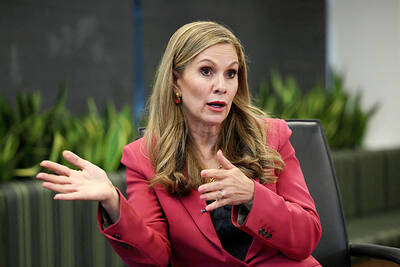
Australians were downloading virtual private networks (VPNs) in droves, while one of the world’s largest porn distributors said it was blocking users from its platforms as the country yesterday rolled out sweeping online age restriction. Australia in December became the first country to impose a nationwide ban on teenagers using social media. A separate law now requires artificial intelligence (AI)-powered chatbot services to keep certain content — including pornography, extreme violence and self-harm and eating disorder material — from minors or face fines of up to A$49.5 million (US$34.6 million). The country also joined Britain, France and dozens of US states requiring
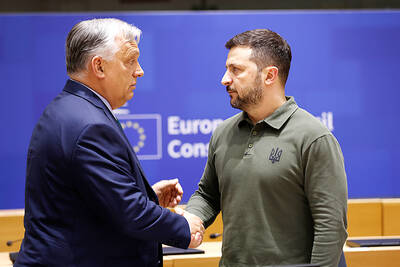
Hungarian authorities temporarily detained seven Ukrainian citizens and seized two armored cars carrying tens of millions of euros in cash across Hungary on suspicion of money laundering, officials said on Friday. The Ukrainians were released on Friday, following their detention on Thursday, but Hungarian officials held onto the cash, prompting Ukraine to accuse Hungary’s Russia-friendly government of illegally seizing the money. “We will not tolerate this state banditism,” Ukrainian Minister of Foreign Affairs Andrii Sybiha said. The seven detained Ukrainians were employees of the Ukrainian state-owned Oschadbank, who were traveling in the two armored cars that were carrying the money between Austria and
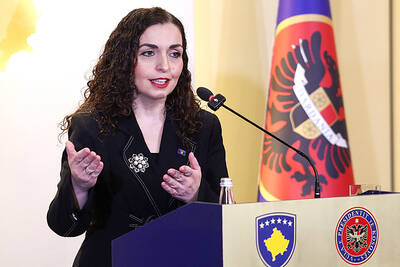
Kosovar President Vjosa Osmani on Friday after dissolving the Kosovar parliament said a snap election should be held as soon as possible to avoid another prolonged political crisis in the Balkan country at a time of global turmoil. Osmani said it is important for Kosovo to wrap up the upcoming election process and form functional institutions for political stability as the war rages in the Middle East. “Precisely because the geopolitical situation is that complex, it is important to finish this electoral process which is coming up,” she said. “It is very hard now to imagine what will happen next.” Kosovo, which declared


 RSS
RSS