


US authorities have located a Chinese woman who had been sought along with 13 other people for questioning in an alleged terror plot targeting Boston, Massachusetts, but the probe so far does not link her to any terrorist group, the FBI said.
Mei Xia Dong was found to be at a US Customs and Border Protection detention facility in southern California after authorities released her name this week "as one of 14 subjects allegedly involved in a Boston terror plot," the FBI said in a statement late Saturday.
But the Federal Bureau of Investigation said Mei Xia Dong, who had previously been identified as a man, may have entered the US for "economic reasons."
"The investigation thus far does not tie her to any terrorist group," the statement said.
She was arrested for an immigration violation by border agents on Nov. 11 and has been in custody since then, it said.
"[The] investigation has determined that Mei Xia Dong paid an undisclosed sum to human smugglers to be brought into the United States through Mexico," the FBI said.
US authorities have released little information about the case, and the FBI said Saturday that "to date, none of the original and anonymous information linking Mei Xia Dong and the 13 others to terrorism has been corroborated."
Authorities on Wednesday said they were investigating an unspecified threat against the city of Boston involving four Chinese individuals and two Iraqis who entered the US illegally through Mexico.
The following day officials added ten names to the list of people sought.
But officials have begun to suspect that the tip was bogus, placed by someone seeking revenge for a drug or human smuggling deal gone awry, according to reports.
"We've always said it was uncorroborated and single-source," Gail Marcinkiewicz, a spokeswoman for the FBI's Boston field office, told reporters when asked about the theory.
Three cellphone calls were placed earlier in the week from Mexico to the California Highway Patrol, according to a report in The Boston Herald newspaper.
A male caller speaking in Spanish said he had smuggled four Chinese and two Iraqis into the US from Mexico, and that the group was headed to Boston either with a dangerous substance or with the intent to acquire it there.
The caller later dropped a package over the US border containing visa and passport information for four people and airline documents for ten others, the paper said.
The caller also mentioned the name of a US man being investigated by US anti-drug authorities, it said.
The list, issued by the FBI again Saturday, now contains 12 Chinese names and one Hispanic name. Five Chinese passport numbers are listed; other nationalities are not specified.
The five Chinese nationals include one woman, Yu Xian Weng. The FBI gave two spellings for two others: Qinquan Lin or Qiquan Lin and Xiang Wei Liu or Xing Wei Liu. The two other Chinese men were identified as Liqiang Liang and Min Xiu Xie.
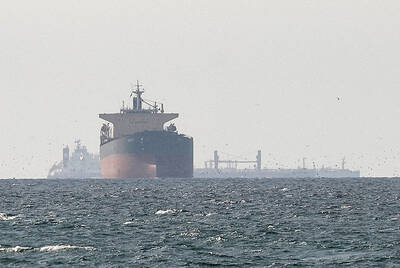
A ship that appears to be taking on the identity of a scrapped gas carrier exited the Strait of Hormuz on Friday, showing how strategies to get through the waterway are evolving as the Middle East war progresses. The vessel identifying as liquefied natural gas (LNG) carrier Jamal left the Strait on Friday morning, ship-tracking data show. However, the same tanker was also recorded as having beached at an Indian demolition yard in October last year, where it is being broken up, according to market participants and port agent’s reports. The ship claiming to be Jamal is likely a zombie vessel that
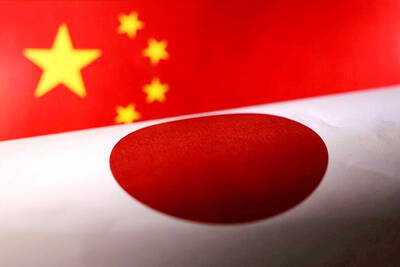
Japan is to downgrade its description of ties with China from “one of its most important” in an annual diplomatic report, according to a draft reviewed by Reuters, as relations with Beijing worsen. This year’s Diplomatic Bluebook, which Japanese Prime Minister Sanae Takaichi’s government is expected to approve next month, would instead describe China as an important neighbor and the relationship as “strategic” and “mutually beneficial.” The draft cites a series of confrontations with Beijing over the past year, including export controls on rare earths, radar lock-ons targeting Japanese military aircraft and increased pressure around Taiwan. The shift in tone underscores a deterioration

LAW CONSTRAINTS: The US has been pressing allies to send warships to open the Strait, but Tokyo’s military actions are limited under its postwar pacifist constitution Japan could consider deploying its military for minesweeping in the Strait of Hormuz if a ceasefire is reached in the war on Iran, Japanese Minister of Foreign Affairs Toshimitsu Motegi said yesterday. “If there were to be a complete ceasefire, hypothetically speaking, then things like minesweeping could come up,” Motegi said. “This is purely hypothetical, but if a ceasefire were established and naval mines were creating an obstacle, then I think that would be something to consider.” Japan’s military actions are limited under its postwar pacifist constitution, but 2015 security legislation allows Tokyo to use its Self-Defense Forces overseas if an attack,

German Chancellor Friedrich Merz’s conservative Christian Democratic Union (CDU) yesterday faced a regional election battle in Rhineland-Palatinate, now held by the center-left Social Democratic Party (SPD). Merz’s CDU has enjoyed a narrow poll lead over the SPD — their coalition partners at the national level — who have ruled the mid-sized state for 35 years. Polling third is the far-right Alternative for Germany (AfD), which spells a greater threat to the two centrist parties in several state elections in September in the country’s ex-communist east. The picturesque state of Rhineland-Palatinate, bordering France, Belgium and Luxembourg and with a population of about 4 million,


 RSS
RSS