


Israel's top military prosecutor has opened an investigation into a platoon commander whom soldiers accuse of emptying an ammunition clip into a 13-year-old Palestinian girl to make sure she was dead, the army said yesterday.
In media interviews, soldiers said the commander approached the girl, who had already been shot and possibly killed, and repeatedly shot her as they pleaded with him to stop.
In an unusual move, the top military prosecutor, Brigadier General Avichai Mandelbleet, ordered an inquiry into the incident before the army finished its own investigation, an army spokeswoman said.
In addition, the battalion and division commanders are conducting their own investigations and will submit their findings to Army chief Lieutenant General Moshe Yaalon, she said.
The issue surfaced when soldiers who serve under the platoon commander -- whose name was not made public -- told Israeli newspapers and TV reporters about the incident.
Iyman Hams, 13, was shot and killed Oct. 5. Initially the army said soldiers shot and killed Hams as she planted a bomb near an army outpost in southern Gaza.
But after soldiers recounted a different version of events to the media, an investigation was opened. The soldiers told the Yediot Ahronot newspaper they were unhappy that the platoon commander had not been suspended.
In disguised voices and without revealing their identities, the soldiers told a chilling story to Israeli TV stations on Sunday night of a platoon commander who fired two bullets from close range at the girl, who had already been shot, to confirm that she was dead.
Two soldiers then described the commander going back a second time and spraying her with automatic weapons fire.
The soldiers told the newspaper that before the commander shot the girl they shouted to him over their two-way radio: "Don't shoot, she's a little girl."
"We saw her from a distance of 70 meters. She was fired at ... from the outpost. She fled and was wounded. I understood that she was dead. The platoon commander neared her, shot two bullets at her, returned toward the force, turned back to her, put the weapon on automatic -- and emptied his entire clip," one soldier told the media.
"He sprayed her. We were in shock, we held our heads. We couldn't believe what he had done. Our hearts ached for her. Just a 13-year-old girl. How do you spray a girl from close range? He was hot for a long time to take out terrorists and shot the girl to relieve pres-sure," the soldier said.
Dr. Ali Musa, director of the hospital in Rafah, said Hams was hit by at least 15 bullets, most in the upper body.
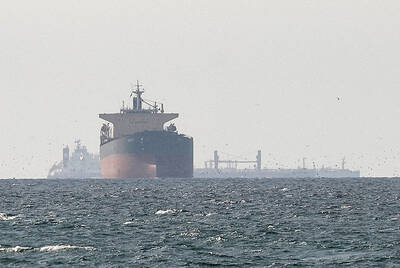
A ship that appears to be taking on the identity of a scrapped gas carrier exited the Strait of Hormuz on Friday, showing how strategies to get through the waterway are evolving as the Middle East war progresses. The vessel identifying as liquefied natural gas (LNG) carrier Jamal left the Strait on Friday morning, ship-tracking data show. However, the same tanker was also recorded as having beached at an Indian demolition yard in October last year, where it is being broken up, according to market participants and port agent’s reports. The ship claiming to be Jamal is likely a zombie vessel that

Japan is to downgrade its description of ties with China from “one of its most important” in an annual diplomatic report, according to a draft reviewed by Reuters, as relations with Beijing worsen. This year’s Diplomatic Bluebook, which Japanese Prime Minister Sanae Takaichi’s government is expected to approve next month, would instead describe China as an important neighbor and the relationship as “strategic” and “mutually beneficial.” The draft cites a series of confrontations with Beijing over the past year, including export controls on rare earths, radar lock-ons targeting Japanese military aircraft and increased pressure around Taiwan. The shift in tone underscores a deterioration

LAW CONSTRAINTS: The US has been pressing allies to send warships to open the Strait, but Tokyo’s military actions are limited under its postwar pacifist constitution Japan could consider deploying its military for minesweeping in the Strait of Hormuz if a ceasefire is reached in the war on Iran, Japanese Minister of Foreign Affairs Toshimitsu Motegi said yesterday. “If there were to be a complete ceasefire, hypothetically speaking, then things like minesweeping could come up,” Motegi said. “This is purely hypothetical, but if a ceasefire were established and naval mines were creating an obstacle, then I think that would be something to consider.” Japan’s military actions are limited under its postwar pacifist constitution, but 2015 security legislation allows Tokyo to use its Self-Defense Forces overseas if an attack,

German Chancellor Friedrich Merz’s conservative Christian Democratic Union (CDU) yesterday faced a regional election battle in Rhineland-Palatinate, now held by the center-left Social Democratic Party (SPD). Merz’s CDU has enjoyed a narrow poll lead over the SPD — their coalition partners at the national level — who have ruled the mid-sized state for 35 years. Polling third is the far-right Alternative for Germany (AfD), which spells a greater threat to the two centrist parties in several state elections in September in the country’s ex-communist east. The picturesque state of Rhineland-Palatinate, bordering France, Belgium and Luxembourg and with a population of about 4 million,


 RSS
RSS