


Street protests erupted after Venezuela's elections council said the opposition lacked enough signatures to force a recall referendum against President Hugo Chavez. Rioting over council delays had spread from Caracas to other cities before the decision and intensified immediately afterward.
Chavez opponents say they submitted more than 3.4 million signatures. Some 2.4 million are needed for a recall election.
But council president Francisco Carrasquero announced on Tuesday that just 1.83 million signatures were valid. Another 876,016 signatures may be valid -- if citizens confirm that they indeed signed the petition, Carrasquero said.
The decision triggered demonstrations by citizens banging pots and pans and exploding fireworks throughout the capital, Caracas.
Even before the announcement, protests surged as the opposition anticipated the result. National guard troops in armored personnel carriers rolled through several cities as demonstrators burned tires and hurled rocks and gasoline bombs at soldiers. Sporadic gunfire was heard for a second straight night in Caracas.
Protests were reported in at least seven other cities, including Merida, Puerto La Cruz, Maracay, San Felipe, the industrial centers of Valencia and Barquisimeto and the western oil city of Maracaibo.
Globovision television broadcast footage of several vehicles burning in a parking lot in Caracas' Los Ruices district, where troops fired rubber bullets at protesters who fought back with Molotov cocktails and threw rocks.
In the eastern city of Puerto La Cruz, troops fired rubber bullets at protesters who were chanting "He's leaving, he's Leaving!" in reference to Chavez, Globovision reported.
The violent demonstrations and clashes began to subside as night fell in most of Caracas, where thousands had taken to the streets earlier in the day. Local TV and radio reported that hundreds, and in some cases thousands, had protested in other cities.
Many opposition leaders had said they would not accept a decision requiring voters to confirm their signatures. The measure was allegedly not included in rules established for the verification process, they said.
The council said that voters would have between March 18 and March 22 to report to voting centers to confirm that they indeed had signed the petition.
Venezuela's opposition claims that such a monumental task, involving hundreds of thousands of citizens, would postpone the referendum or derail it entirely.
Protests have forced private banks to shut 20 branch offices, prevented garbage collection, caused traffic jams and hampered transit by emergency vehicles. For a second day, thousands were unable to get to work.
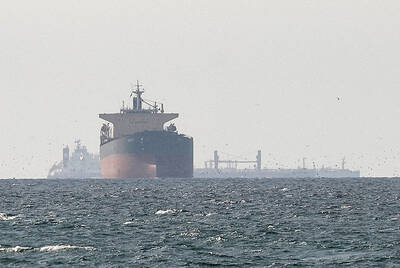
A ship that appears to be taking on the identity of a scrapped gas carrier exited the Strait of Hormuz on Friday, showing how strategies to get through the waterway are evolving as the Middle East war progresses. The vessel identifying as liquefied natural gas (LNG) carrier Jamal left the Strait on Friday morning, ship-tracking data show. However, the same tanker was also recorded as having beached at an Indian demolition yard in October last year, where it is being broken up, according to market participants and port agent’s reports. The ship claiming to be Jamal is likely a zombie vessel that

Cannabis-based medicines have shown little evidence of effectiveness for treating most mental health and substance-use disorders, according to a large review of past studies published in a major medical journal on Monday. Medical use of cannabinoids has been expanding, including in the US, Canada and Australia, where many patients report using cannabis products to manage conditions such as anxiety, post-traumatic stress disorder and sleep problems. Researchers reviewed data from 54 randomized clinical trials conducted between 1980 and May last year involving 2,477 participants for their analysis published in The Lancet. The studies assessed cannabinoids as a primary treatment for mental disorders or substance-use
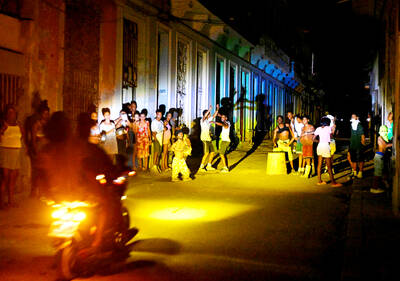
NATIONWIDE BLACKOUT: US President Donald Trump cut off Venezuelan oil shipments to Cuba, strangling the Caribbean island’s already antiquated grid Cuba’s national electric grid collapsed on Monday, the nation’s grid operator said, leaving about 10 million people without power amid a US-imposed oil blockade that has crippled the already obsolete generation system. Grid operator UNE on social media said that it is investigating the causes of the blackout, the latest in a series of widespread outages that last for hours or days and that this weekend sparked a rare violent protest in the communist-run nation. Officials ruled out a major power plant failure, but had still not pinpointed the root cause of the grid collapse, suggesting a problem with transmission. Officials said that
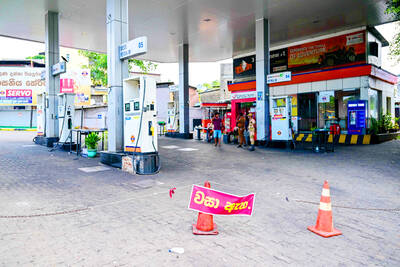
CONSERVING FUEL: State institutions are to operate only four days a week starting tomorrow, with the measures also applying to schools and universities Sri Lanka on Monday announced a shorter working week to conserve its scarce fuel reserves as it prepares for a prolonged war in the Middle East. The Strait of Hormuz, a key waterway through which about 20 percent of global exports pass in peacetime, has been effectively closed by Iran in retaliation over the US and Israeli war against it, now in its third week. Sri Lankan Commissioner-General of Essential Services Prabath Chandrakeerthi said state institutions would operate only four days a week starting tomorrow. The new austerity measures would also apply to schools and universities, and would remain in place indefinitely. “We are


 RSS
RSS