


Rising US-Iran tensions prompted President Tsai Ing-wen (蔡英文) yesterday to convene a high-level national security meeting to discuss the government’s responses, Presidential Office spokesman Alex Huang (黃重諺) said.
Cabinet ministers and agency heads briefed Tsai on the impact of a potential escalation of the crisis and the president ordered officials to take steps to safeguard the nation’s financial system, energy supply, Taiwanese in the Middle East and peace in the Taiwan Strait, Huang told a press conference.
She also decided to raise the alert level for the military ahead of tomorrow’s elections, he said.
The Ministry of Economic Affairs, the Financial Supervisory Commission and the central bank were told to closely monitor the stock and currency markets, ensure their basic operational capabilities and take measures to stabilize the nation’s finances if necessary, Huang said.
“Taiwan has a solid economic base and such measures are aimed at possible short-term effects” from the potential deterioration of US-Iran relations, he cited Tsai as telling the meeting.
The president said that national crude reserves could provide energy for more than 100 days, so the public should not worry, as the authorities would ensure that prices remain balanced and that people’s daily lives would not be affected, Huang added.
Tsai told the Ministry of Foreign Affairs to monitor developments, ensure that it can contact Taiwanese residents and travelers in the region and draw up a contingency plan for their evacuation, if necessary, he said.
The Ministry of National Defense was told to closely monitor the Strait to prevent China from making any moves while the US’ attention is focused on the Middle East, he said.
The security meeting was attended by Premier Su Tseng-chang (蘇貞昌), National Security Council (NSC) Secretary-General David Lee (李大維), Minister of Foreign Affairs Joseph Wu (吳釗燮), Minister of National Defense Yen De-fa (嚴德發), Mainland Affairs Council Minister Chen Ming-tong (陳明通), Minister of Economic Affairs Shen Jong-chin (沈榮津), National Security Bureau Director-General Chiu Kuo-cheng (邱國正), NSC Deputy Secretary-General Tsai Ming-yen (蔡明彥) and NSC Adviser Shih Jun-ji (施俊吉).
The foreign ministry late on Wednesday night issued a red travel alert for Iraq and four Iranian provinces, its highest level alert.
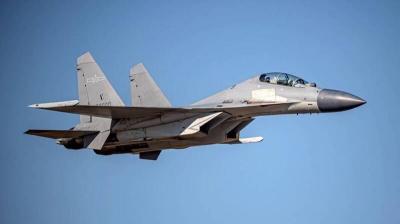
Eight Chinese naval vessels and 24 military aircraft were detected crossing the median line of the Taiwan Strait between 6am yesterday and 6am today, the Ministry of National Defense said this morning. The aircraft entered Taiwan’s northern, central, southwestern and eastern air defense identification zones, the ministry said. The armed forces responded with mission aircraft, naval vessels and shore-based missile systems to closely monitor the situation, it added. Eight naval vessels, one official ship and 36 aircraft sorties were spotted in total, the ministry said.
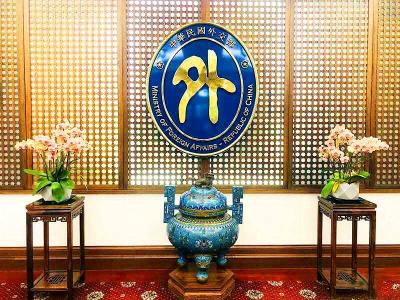
The Ministry of Foreign Affairs (MOFA) today said that if South Korea does not reply appropriately to its request to correct Taiwan’s name on its e-Arrival card system before March 31, it would take corresponding measures to alter how South Korea is labeled on the online Taiwan Arrival Card system. South Korea’s e-Arrival card system lists Taiwan as “China (Taiwan)” in the “point of departure” and “next destination” fields. The ministry said that it changed the nationality for South Koreans on Taiwan’s Alien Resident Certificates from “Korea” to “South Korea” on March 1, in a gesture of goodwill and based on the

Taiwanese officials were shown the first of 66 F-16V fighter jets purchased by Taiwan from the United States, the Ministry of National Defense said yesterday, adding the aircraft has completed an initial flight test and is expected to be delivered later this year. A delegation led by Deputy Minister of National Defense Hsu Szu-chien (徐斯儉) visited Lockheed Martin’s F-16 C/D Block 70 (also known as F-16V) assembly line in South Carolina on March 16 to view the aircraft. The jet will undergo a final acceptance flight in the US before being delivered to Taiwan, the
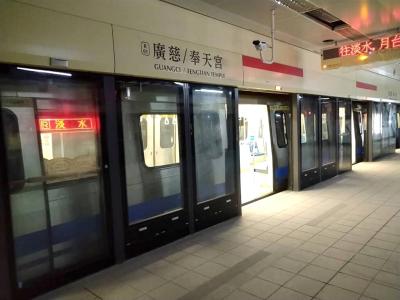
The New Taipei Metro's Sanyin Line and the eastern extension of the Taipei Metro's Tamsui-Xinyi Line (Red Line) are scheduled to begin operations in June, the National Development Council said today. The Red Line, which terminates at Xiangshan Station, would be connected by the 1.4km extension to a new eastern terminal, Guangci/Fengtian Temple Station, while the Sanyin Line would link New Taipei City's Tucheng and Yingge stations via Sanxia District (三峽). The council gave the updates at a council meeting reviewing progress on public construction projects for this year. Taiwan's annual public infrastructure budget would remain at NT$800 billion (US$25.08 billion), with NT$97.3


 RSS
RSS