


AVIATION
CAL flight turns back
A China Airlines flight with about 300 passengers on board had to turn around and return to Taiwan Taoyuan International Airport yesterday morning after an engine malfunction. Flight 100 took off from Taoyuan at 9:25am en route to Tokyo’s Narita International Airport. The pilot detected an error signal on one of the engines about 30 minutes after takeoff and decided to return to Taoyuan after failing to fix the problem. The plane landed safely at 10:27am. The airline arranged for the 296 passengers on board to fly on another aircraft, which departed at 1:30pm. Passengers in the Airbus 330-300 said in interviews on TVBS cable network they heard a loud boom and could smell burning plastic. CAL said it would conduct further inspections to determine the cause of the problem.
CULTURE
Ma to give special coins
The red envelopes President Ma Ying-jeou (馬英九) will be handing out for the Lunar New Year holiday will have different elements to welcome the Year of Rabbit: two NT$1 coins rather than coin-shape chocolates. Presidential Office spokesman Lo Chih-chiang (羅智強) said Ma and Vice President Vincent Siew (蕭萬長) would begin distributing the red envelopes on Lunar New Year’s Eve, which falls on Feb. 2. Lo said they had 200,000 enveloopes in stock, which cost about NT$1 million (US$34,100) to produce, including the cost of the coins. As the coins are real, Lo urged parents to remind their young children not to eat them. The special design was ordered by Ma to mark the centenary of the Republic of China, Lo said.
WEATHER
Cold snap hits north
Temperatures in northern parts of the country could drop to 10oC today after a strong cold air mass arrived over the weekend, the Central Weather Bureau said yesterday. The bureau also issued low temperature alerts for residents living in coastal areas north of Hsinchu County, as well as the outlying islands of Kinmen and Matsu. Daytime temperatures yesterday were between 14oC and 15oC in the north, while the central parts of the nation experienced temperatures in the high teens and low-20s in the south. The lowest temperature was reported early yesterday morning in Hsinchu, with the mercury sliding to 10.8oC. The bureau added that it might snow on Hehuanshan (合歡山) today. The strong cold air mass could start weakening by tomorrow. Temperatures will drop again on Friday when another cold wave is expected to hit the nation.
TRANSPORT
City to manage bike stands
The Taipei City Government yesterday said it would begin systematically managing 2,000 bicycle stands this year to address the parking needs of the growing number of riders who commute or get around on their bikes. The Parking Management and Development Office said it planned to put more spaces for bicycles on the side of roads as part of the project, but would also gradually increase the number of bicycle parking lots. One goal is to increase parking capacity near public transport hubs to make it easier for bike riders to take advantage of the MRT system’s expanding mixed-mode commuting network. Effectively managing those parking lots will be just as important as building them if the bicycle-MRT commuting option catches on, officials said. One new parking lot built last year near the MRT Technology Building Station, with a capacity of 655 bicycles, has already reduced bike parking violations and bicycle theft, the city said.

Actor Darren Wang (王大陸) was sentenced to six months in prison, commutable to a fine, by the New Taipei District Court today for contravening the Personal Data Protection Act (個人資料保護法) in a case linked to an alleged draft-dodging scheme. Wang allegedly paid NT$3.6 million (US$114,380) to an illegal group to help him evade mandatory military service through falsified medical documents, prosecutors said. He transferred the funds to Chen Chih-ming (陳志明), the alleged mastermind of a draft-evasion ring, although he lost contact with him as he was already in detention on fraud charges, they said. Chen is accused of helping a

SECURITY: Starlink owner Elon Musk has taken pro-Beijing positions, and allowing pro-China companies to control Taiwan’s critical infrastructure is risky, a legislator said Starlink was reluctant to offer services in Taiwan because of the nation’s extremely high penetration rates in 4G and 5G services, the Ministry of Digital Affairs said yesterday. The ministry made the comments at a meeting of the legislature’s Transportation Committee, which reviewed amendments to Article 36 of the Telecommunications Management Act (電信管理法). Article 36 bans foreigners from holding more than 49 percent of shares in public telecommunications networks, while shares foreigners directly and indirectly hold are also capped at 60 percent of the total, unless specified otherwise by law. The amendments, sponsored by Chinese Nationalist Party (KMT) Legislator Ko
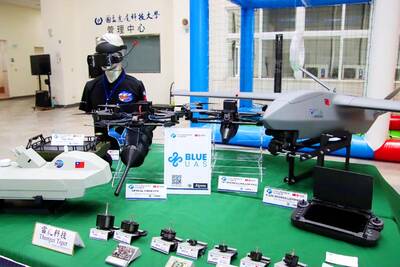
NON-RED SUPPLY: Boosting the nation’s drone industry is becoming increasingly urgent as China’s UAV dominance could become an issue in a crisis, an analyst said Taiwan’s drone exports to Europe grew 41.7-fold from 2024 to last year, with demand from Ukraine’s fight against Russian aggression the most likely driver of growth, a study showed. The Institute for Democracy, Society and Emerging Technology (DSET) in a statement on Wednesday said it found that many of Taiwan’s uncrewed aerial vehicle (UAV) sales were from Poland and the Czech Republic. These countries likely transferred the drones to Ukraine to aid it in its fight against the Russian invasion that started in 2022, it said. Despite the gains, Taiwan is not the dominant drone exporter to these markets, ranking second and fourth
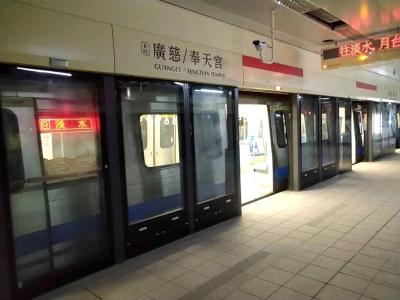
The eastern extension of the Taipei MRT Red Line could begin operations as early as late June, the Taipei Department of Rapid Transit Systems said yesterday. Taipei Rapid Transit Corp said it is considering offering one month of free rides on the new section to mark its opening. Construction progress on the 1.4km extension, which is to run from the current terminal Xiangshan Station to a new eastern terminal, Guangci/Fengtian Temple Station, was 90.6 percent complete by the end of last month, the department said in a report to the Taipei City Council's Transportation Committee. While construction began in October 2016 with an


 RSS
RSS