


National Cheng Kung University (NCKU) introduced on Monday the world's first reference book on literature in Taiwan, titled Chronology of Classical Literature in Taiwan: The Ming and Qing Dynasties.
The 800-page book was completed in November after seven years by a team led by two NCKU professors — Shih Yi-lin (施懿琳) and Liao Mei-yu (廖美玉) — and 27 researchers. It traces the development of classical literature in Taiwan from 1651 to 1895, focusing on the writers and literary and educational developments, as well as significant events in Taiwan, during the Qing Dynasty and around the world.
In a report on the NCKU Web site, Shih said that the development of classical literature in Taiwan should have a place in history and should be examined within the context of significant events of the time to understand the meaning and value of the literati, works and literary activities during specific periods.
Taiwanese literature was not regarded as an independent subject to be taught formally in universities until the middle of the 1990s, Shih said.
She said that when she was teaching a course called “History of Classical Literature in Taiwan” in 2002, she became aware of a dearth of information on the subject.
Shih said this inspired her to write the book, as well as the belief that there was a link between the development of classical literature in Taiwan and the politics and social events of past eras.
Readers will discover that while the rise and fall of the dynasties in China hinged on wars, it was literature that reflected the people's lives, social phenomena of the times and the state of the physical environment, Liao said in an interview with the Central News Agency.
Historical records show that Sheng Kuang-wen (沈光文) (1613-1688) was the first writer and scholar from China to move to Taiwan in 1651, or during the late Ming Dynasty — and was crucial to the development of Taiwanese literature.
By the late Qing period, Taiwanese literature had developed to a level almost on par with China's, Shih said.
However, the Chinese Nationalist Party (KMT) government, which fled to Taiwan in 1949 after losing the civil war in China, did not place any great importance on Taiwanese literature, and it was not until the 1970s that native literature began to gain a footing, she said.
The study of Taiwanese literature as a formal course began in the late 1980s after martial law was lifted.
The book offers a vast amount of data for research on Taiwanese literature, Shih said, adding that she hoped to chronicle the development of Taiwanese literature in the Japanese colonial era between 1895 and 1945 and after World War II.
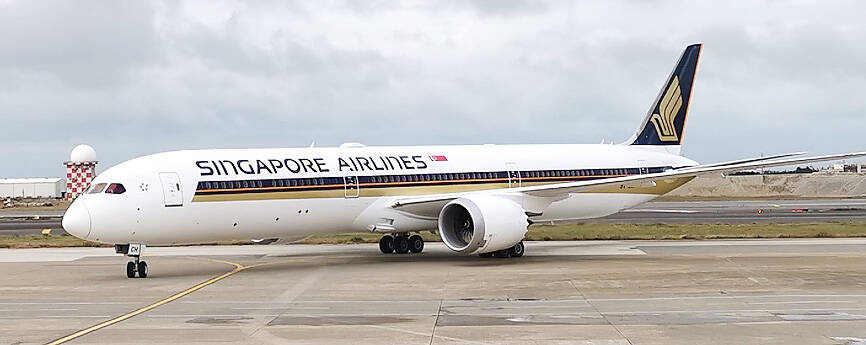
INCREASED CAPACITY: The flights on Mondays, Wednesdays, Fridays and Sundays would leave Singapore in the morning and Taipei in the afternoon Singapore Airlines is adding four supplementary flights to Taipei per week until May to meet increased tourist and business travel demand, the carrier said on Friday. The addition would raise the number of weekly flights it operates to Taipei to 18, Singapore Airlines Taiwan general manager Timothy Ouyang (歐陽漢源) said. The airline has recorded a steady rise in tourist and business travel to and from Taipei, and aims to provide more flexible travel arrangements for passengers, said Ouyang, who assumed the post in July last year. From now until Saturday next week, four additional flights would depart from Singapore on Monday, Wednesday, Friday
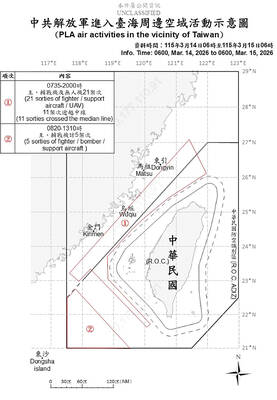
The Ministry of National Defense yesterday reported the return of large-scale Chinese air force activities after their unexplained absence for more than two weeks, which had prompted speculation regarding Beijing’s motives. China usually sends fighter jets, drones and other military aircraft around the nation on a daily basis. Interruptions to such routine are generally caused by bad weather. The Ministry of National Defense said it had detected 26 Chinese military aircraft in the Taiwan Strait over the previous 24 hours. It last reported that many aircraft on Feb. 25, when it spotted 30 aircraft, saying Beijing was carrying out another “joint combat
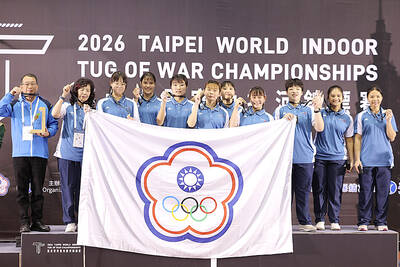
Taiwan successfully defended its women’s 540 kilogram title and won its first-ever men’s 640 kg title at the 2026 World Indoor Tug of War Championships in Taipei yesterday. In the women’s event, Taiwan’s eight-person squad reached the final following a round-robin preliminary round and semifinals featuring teams from Ukraine, Japan, Thailand, Vietnam, the Basque Country and South Korea. In the finals, they swept the Basque team 2-0, giving the team composed mainly of National Taiwan Normal University students and graduates its second championship in a row, and its fourth in five years. Team captain
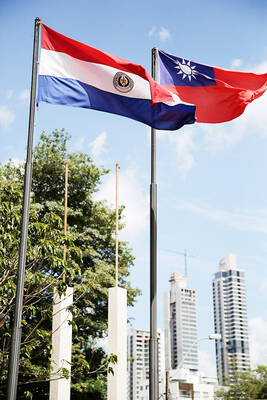
When Paraguayan opposition lawmaker Leidy Galeano returned from an all-expenses-paid tour of six Chinese cities late last year, she was convinced Paraguay risked missing out on major economic gains by sticking with longtime ally Taipei over Beijing — a message that participants on the trip heard repeatedly from Chinese officials. “Everything I saw there, I wanted for my country,” said Galeano, a member of the newly-formed Yo Creo party whose senior figures have spoken favorably about China. This trip and others like it — which people familiar with the visits said were at the invitation of the Chinese consulate in Sao Paulo


 RSS
RSS