


Olympic taekwondo competitor Su Li-wen (蘇麗文) was lauded yesterday by fans and politicians across party lines for her display of perseverence on the Olympic floor on Thursday.
Su, 27, aggravated an old injury to her left knee in her 1-0 first round defeat to South Korea’s Lim Su-jeong.
She tied with Croatia’s Martina Zubcic 4-4 after the first three rounds of the bronze medal match, but was defeated after losing a decisive point in the fourth round.
During the match, Su continued fighting until the end — despite falling to the mat 11 times in visible pain — as she had in previous competitions.
Her perseverance earned her rounds of applause and cheers from spectators in Beijing, as well as from members of the international press.
Su was carried from the mat by her coach after her defeat and was immediately taken to a hospital for treatment.
Going into the Olympics, Su, champion of the 2006 Asian Games in Doha, the 2007 World University Games in Bangkok and the 2008 Asian Taekwondo Championship, was described by Sports Illustrated as Taiwan’s only plausible chance of winning a gold medal in Beijing.
It was Su’s first Olympics.
President Ma Ying-jeou (馬英九) called Su yesterday morning to express his admiration for the courage and perseverance she demonstrated, saying she had moved the people of Taiwan.
“President Ma was also deeply moved by Su Li-wen’s fighting spirit. Her display of sportsmanship during the matches makes us even prouder than grabbing a gold medal,” Presidential Office spokesman Wang Yu-chi (王郁琦) quoted Ma as saying yesterday.
Ma later phoned Su’s parents to congratulate them on their daughter’s brave performance in Beijing, Wang said.
Ma also called taekwondo bronze medallist Sung Yu-chi (宋玉麒) to congratulate him on his performance, Wang said.
Meanwhile, Democratic Progressive Party (DPP) legislators filed a request with the Cabinet yesterday, asking the government to bestow an honor on Su for her “remarkable performance” in Beijing.
DPP legislators Hsueh Ling (薛凌) and Chai Trong-rong (蔡同榮) said in a joint press release that Su should be included in elementary school textbooks.
“Although Su didn’t win a medal in the competition, her tough will to fight to the last second has inspired many,” the press release said.
“Even the Chinese press praised her for winning respect even though she lost the game,” the lawmakers said.
Hsueh and Chai suggested that the government reward Su for her performance with a life-time monthly check, special priority for government positions and discounts on utility bills.
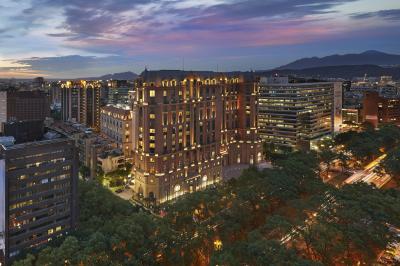
The first global hotel Keys Selection by the Michelin Guide includes four hotels in Taiwan, Michelin announced yesterday. All four received the “Michelin One Key,” indicating guests are to experience a “very special stay” at any of the locations as the establishments are “a true gem with personality. Service always goes the extra mile, and the hotel provides much more than others in its price range.” Of the four hotels, three are located in Taipei and one in Taichung. In Taipei, the One Key accolades were awarded to the Capella Taipei, Kimpton Da An Taipei and Mandarin Oriental Taipei. Capella Taipei was described by
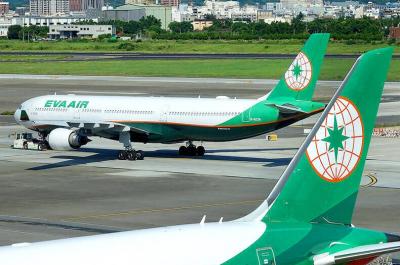
EVA Airways today confirmed the death of a flight attendant on Saturday upon their return to Taiwan and said an internal investigation has been launched, as criticism mounted over a social media post accusing the airline of failing to offer sufficient employee protections. According to the post, the flight attendant complained of feeling sick on board a flight, but was unable to take sick leave or access medical care. The crew member allegedly did not receive assistance from the chief purser, who failed to heed their requests for medical attention or call an ambulance once the flight landed, the post said. As sick
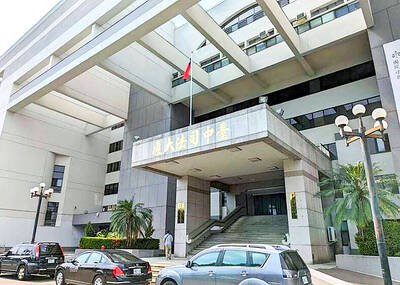
The Taichung District Court yesterday confirmed its final ruling that the marriage between teenage heir Lai (賴) and a man surnamed Hsia (夏) was legally invalid, preventing Hsia from inheriting Lai’s NT$500 million (US$16.37 million) estate. The court confirmed that Hsia chose not to appeal the civil judgement after the court handed down its ruling in June, making the decision final. In the June ruling, the court said that Lai, 18, and Hsia, 26, showed “no mutual admiration before the marriage” and that their interactions were “distant and unfamiliar.” The judge concluded that the couple lacked the “true intention of
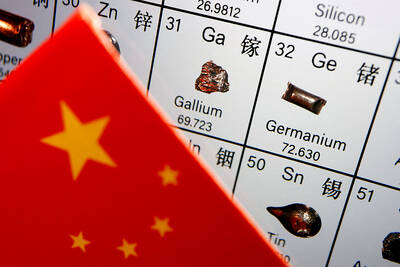
INDUSTRY: Beijing’s latest export measures go beyond targeting the US and would likely affect any country that uses Chinese rare earths or related tech, an academic said Taiwanese industries could face significant disruption from China’s newly tightened export controls on rare earth elements, as much of Taiwan’s supply indirectly depends on Chinese materials processed in Japan, a local expert said yesterday. Kristy Hsu (徐遵慈), director of the Taiwan ASEAN Studies Center at the Chung-Hua Institution for Economic Research, said that China’s latest export measures go far beyond targeting the US and would likely affect any country that uses Chinese rare earths or related technologies. With Japan and Southeast Asian countries among those expected to be hit, Taiwan could feel the impact through its reliance on Japanese-made semi-finished products and


 RSS
RSS