


A fugitive former senior executive of the bankrupt Chung Shing Bank, convicted in a scandal involving NT$7.4 billion (US$239 million) in illegal loans, was repatriated from China yesterday, law enforcement authorities said.
Wang Hsuan-jen (王宣仁), a former general manager of the Kaohsiung-based bank who fled to China in May last year, was repatriated from Fuzhou City, Fujian Province, to Matsu aboard the Chinese ferry The Strait.
After arriving in Matsu, Wang was airlifted aboard a police helicopter to Taipei under the escort of Criminal Investigation Bureau (CIB) officials.
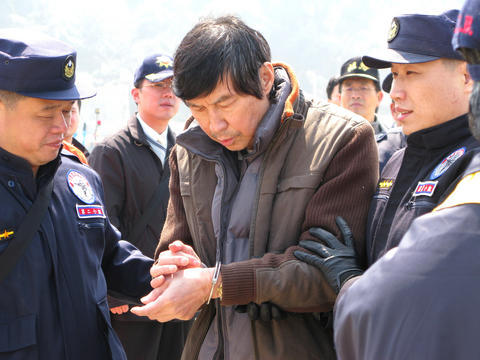
PHOTO: CHIU CHUN-FU, TAIPEI TIMES
The repatriation made Wang the first major Taiwanese economic criminal to be repatriated from China since the Kinmen Agreement was signed on Sept. 12, 1990.
CIB officials said Chinese authorities had planned to repatriate Wang on Jan. 29, but this was postponed as a result of inclement weather and rough seas.
APPRECIATION
Taiwanese prosecutors have expressed appreciation toward China for taking the initiative to arrest Wang in Shanghai on Jan. 24.
The prosecutors urged China to continue to cooperate with Taiwan by repatriating other notorious Taiwanese fugitives, including former Chung Shing Bank chairman Wang Yu-yun (
Wang Hsuan-jen, who is not related to Wang Yu-yun and Wang Chih-hsiung, was sentenced to six years and eight months in prison in April last year for his role in the illegal loan case involving Taiwan Pineapple Corp. He fled Taiwan before he was due to begin serving his sentence on May 3 last year.
Wang Hsuan-jen was convicted of conspiring with Pineapple Corp chairman Huang Tsung-hung (
AUCTION
Chung Shing Bank was auctioned off by the government-run Central Deposit Insurance Corp to Union Bank of Taiwan in 2005.
Wang Hsuan-jen was one of 25 Taiwanese criminals repatriated from China yesterday. The other 24 included fugitives and those who have served their time in China.
Meanwhile, Taiwanese authorities repatriated Chinese hijacker Wong Zhihua (
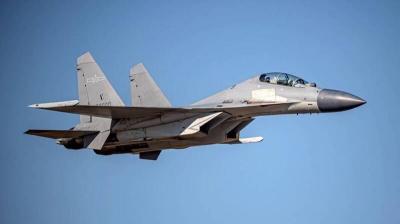
Eight Chinese naval vessels and 24 military aircraft were detected crossing the median line of the Taiwan Strait between 6am yesterday and 6am today, the Ministry of National Defense said this morning. The aircraft entered Taiwan’s northern, central, southwestern and eastern air defense identification zones, the ministry said. The armed forces responded with mission aircraft, naval vessels and shore-based missile systems to closely monitor the situation, it added. Eight naval vessels, one official ship and 36 aircraft sorties were spotted in total, the ministry said.
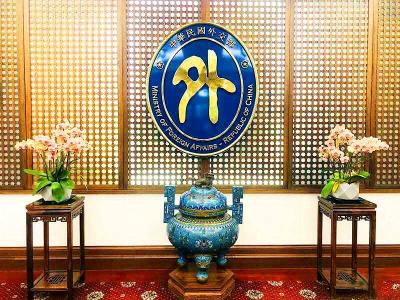
The Ministry of Foreign Affairs (MOFA) today said that if South Korea does not reply appropriately to its request to correct Taiwan’s name on its e-Arrival card system before March 31, it would take corresponding measures to alter how South Korea is labeled on the online Taiwan Arrival Card system. South Korea’s e-Arrival card system lists Taiwan as “China (Taiwan)” in the “point of departure” and “next destination” fields. The ministry said that it changed the nationality for South Koreans on Taiwan’s Alien Resident Certificates from “Korea” to “South Korea” on March 1, in a gesture of goodwill and based on the
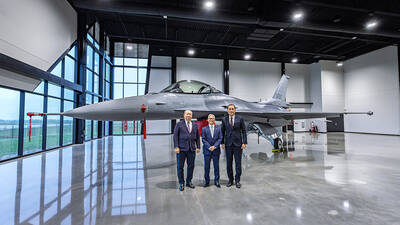
Taiwanese officials were shown the first of 66 F-16V fighter jets purchased by Taiwan from the United States, the Ministry of National Defense said yesterday, adding the aircraft has completed an initial flight test and is expected to be delivered later this year. A delegation led by Deputy Minister of National Defense Hsu Szu-chien (徐斯儉) visited Lockheed Martin’s F-16 C/D Block 70 (also known as F-16V) assembly line in South Carolina on March 16 to view the aircraft. The jet will undergo a final acceptance flight in the US before being delivered to Taiwan, the
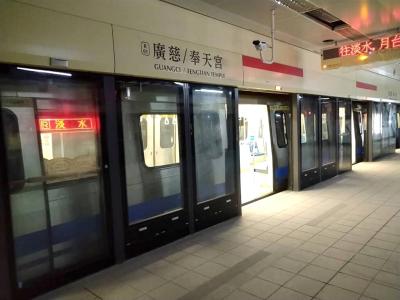
The New Taipei Metro's Sanyin Line and the eastern extension of the Taipei Metro's Tamsui-Xinyi Line (Red Line) are scheduled to begin operations in June, the National Development Council said today. The Red Line, which terminates at Xiangshan Station, would be connected by the 1.4km extension to a new eastern terminal, Guangci/Fengtian Temple Station, while the Sanyin Line would link New Taipei City's Tucheng and Yingge stations via Sanxia District (三峽). The council gave the updates at a council meeting reviewing progress on public construction projects for this year. Taiwan's annual public infrastructure budget would remain at NT$800 billion (US$25.08 billion), with NT$97.3


 RSS
RSS