


Most Chinese spouses of Taiwanese are anticipating the Lunar New Year holiday with the same excitement as other people in Taiwan, tinged with a little disappointment that they cannot be reunited with their relatives in China to celebrate the year's most important festival.
Despite the company of the family of her husband and friends, Yin, who has lived in Taiwan for eight years with her Taiwanese husband, cannot stem her yearning for her daughter, who studies in Zhejiang Province.
The daughter is from an earlier marriage. When Yin decided to remarry and move to Taiwan, her daughter was only a teenager and she had to leave her with relatives. Yin has returned a few times to her hometown over the past eight years, yet her greatest desire -- to live close to her daughter -- will not be realized soon.
In contrast to the cheerful atmosphere of the Lunar New Year, Yin's regret seems to be more intense than usual.
"However happily you live here, the sorrow over the separation from your close relatives remains inconsolable," she said.
Yin is not alone. Feng, a young woman from Anhui Province, who had been hoping to see her parents, ditched the idea after considering the logistical problems involved.
"Procedures for applying for a family visit visa are too complicated and the maximum permitted time is just one month, at most two," Feng said.
Planning a family reunion is long because it is difficult for Chinese spouses to receive a Republic of China identity card. They often have to wait eight years to be naturalized and according to government statistics, as of last November, only 44,493 out of 250,160 Chinese spouses (17.8 percent) had been granted an identity card, while 59,906 out of 137,353 spouses from other countries (43.6 percent) had become naturalized citizens.
In addition, Chinese people can only come to Taiwan on a group tourist visa and can stay for a maximum of 10 days.
Although Chinese spouses suffer from the separation from their families in China during the Lunar New Year holiday, they are excited nevertheless about the festival.
"In Guangdong Province, families that are well-off prepare `dragon-phoenix soup' made with snake and chicken or `turtle-snake soup,'" said a young woman who was born in Shenzhen.
She said that in general, Taiwan celebrates the Lunar New Year with much the same traditions and customs as in China.
"But I was surprised that people in Taiwan keep the tradition of worshiping gods and ancestors during the Lunar New Year. This kind of tradition is no longer popular in China after the Cultural Revolution," she said.
The Taipei-based Chinese Association for Relief and Ensuring Services, organizes English, dancing and cooking courses for Chinese spouses, while on Jan. 20, the Pearl S. Buck Foundation invited low-income families of foreign spouses for an early celebration of the Lunar New Year.
These NGOs, however, do not want their activities to be seen as charity for foreigners, since they do not want to differentiate between Taiwanese and foreign spouses.

Nipah virus infection is to be officially listed as a category 5 notifiable infectious disease in Taiwan in March, while clinical treatment guidelines are being formulated, the Centers for Disease Control (CDC) said yesterday. With Nipah infections being reported in other countries and considering its relatively high fatality rate, the centers on Jan. 16 announced that it would be listed as a notifiable infectious disease to bolster the nation’s systematic early warning system and increase public awareness, the CDC said. Bangladesh reported four fatal cases last year in separate districts, with three linked to raw date palm sap consumption, CDC Epidemic Intelligence

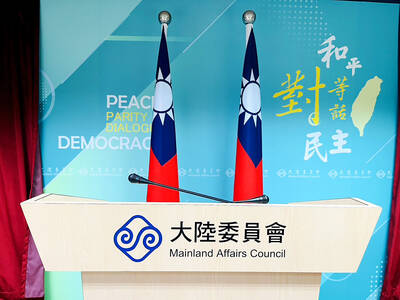
Two Taiwanese prosecutors were questioned by Chinese security personnel at their hotel during a trip to China’s Henan Province this month, the Mainland Affairs Council (MAC) said yesterday. The officers had personal information on the prosecutors, including “when they were assigned to their posts, their work locations and job titles,” MAC Deputy Minister and spokesman Liang Wen-chieh (梁文傑) said. On top of asking about their agencies and positions, the officers also questioned the prosecutors about the Cross-Strait Joint Crime-Fighting and Judicial Mutual Assistance Agreement, a pact that serves as the framework for Taiwan-China cooperation on combating crime and providing judicial assistance, Liang
Reports of Taiwanese going missing, being detained or interrogated, or having their personal liberties restricted in China increased about fourfold annually last year, the Mainland Affairs Council (MAC) said yesterday. Last year, 221 Taiwanese who traveled to China were reported missing, were detained and interrogated, or otherwise had their personal freedom restricted, up from 55 the previous year, the council said. Reopening group tours to China would be risky, as it would leave travelers with no way to seek help through official channels after Beijing shut down dialogue between the associations tasked with handling cross-strait tourism, the MAC said. Taipei’s Taiwan Strait Tourism
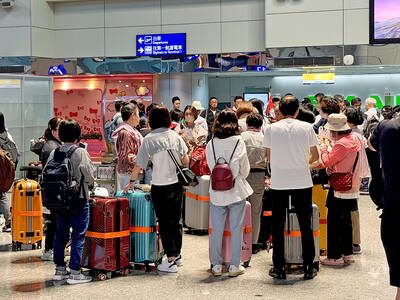
SHIFT: Taiwan is evolving from a transit stop into a tourist destination, with more international travelers willing to spend on tours, dining and cultural activities Taiwan rose three places in the World Tourism Barometer to 36th globally in 2024, with international tourism revenue of US$10.028 billion, the Tourism Administration said on Monday. The UN Tourism Organization publication said that its focus has switched from whether a country has returned to pre-COVID-19 levels of tourism to the amount spent by a tourist during an overseas trip. The nation last year welcomed 8.57 million international tourists, about 9 percent more than in 2024, with most tourists coming from Japan, South Korea, and Hong Kong and Macau, all of which accounted for at least 1 million tourists each. During the first


 RSS
RSS