


The Chinese Nationalist Party (KMT) caucus slammed the Centers for Disease Control (CDC) yesterday, accusing the organization of failing to react sooner to a nationwide outbreak of conjunctivitis.
At a press conference in the legislature, KMT Legislator Hsieh Kuo-liang (
"At the very beginning of the outbreak, the DOH and the CDC regarded the cases as regular conjunctivitis and it never occurred to them that other kinds of bacteria could have been responsible. Therefore, they did not take the outbreak seriously," Hsieh said.
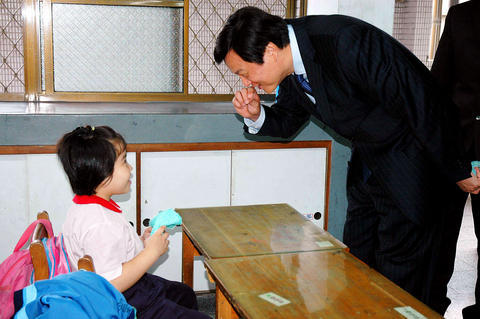
PHOTO: CNA
Hsieh said the outbreak first hit Keelung and Yunlin on Oct. 4, but the CDC did not collect samples from patients to determine the cause of the condition until Oct. 8 although several thousand pinkeye cases had been reported.
The CDC confirmed on Thursday that Coxackievirus type 24, an enterovirus, was responsible.
"A CDC official told me in private that Coxackievirus type 24 once infected 40 percent of the residents of a town abroad. That is to say, the virus has the ability to infect up to 40 percent [of a population]," Hsieh said, asking if a similar situation could occur in Taiwan.
"[The DOH and CDC] completely ignored the possible serious consequences of such an acute disease," Hsieh said, adding that the conjunctivitis outbreak has spread to Taipei and Kaohsiung.
Steve Kuo (
Kuo said that Coxackievirus type 24 contributed to a similar outbreak in Central and South America between August and October 2003, during which time hundreds of thousands of people were infected, although the infection rarely caused serious health problems.
Kuo said 10,510 students nationwide had been infected with the disease as of Friday with cases concentrated in Keelung, Yunlin, Taipei, Kaohsiung and Chiayi.
"What is alarming is that the outbreak implies that people in the country still have poor health habits," Kuo said.
Starting yesterday for three weeks, Taipei City schools must report cases of pinkeye to help track the outbreak, a city government education official said yesterday.
Department of Education Director Wu Ching-chi (
Additional reporting by CNA
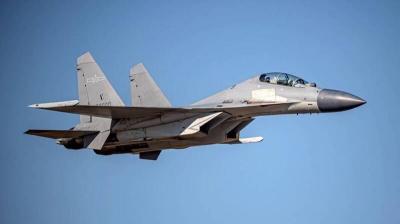
Eight Chinese naval vessels and 24 military aircraft were detected crossing the median line of the Taiwan Strait between 6am yesterday and 6am today, the Ministry of National Defense said this morning. The aircraft entered Taiwan’s northern, central, southwestern and eastern air defense identification zones, the ministry said. The armed forces responded with mission aircraft, naval vessels and shore-based missile systems to closely monitor the situation, it added. Eight naval vessels, one official ship and 36 aircraft sorties were spotted in total, the ministry said.
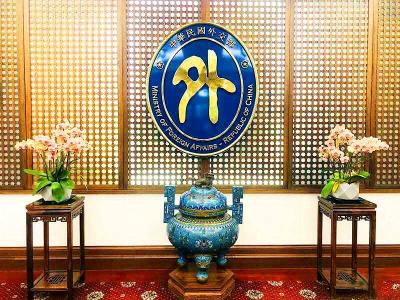
The Ministry of Foreign Affairs (MOFA) today said that if South Korea does not reply appropriately to its request to correct Taiwan’s name on its e-Arrival card system before March 31, it would take corresponding measures to alter how South Korea is labeled on the online Taiwan Arrival Card system. South Korea’s e-Arrival card system lists Taiwan as “China (Taiwan)” in the “point of departure” and “next destination” fields. The ministry said that it changed the nationality for South Koreans on Taiwan’s Alien Resident Certificates from “Korea” to “South Korea” on March 1, in a gesture of goodwill and based on the

Taiwanese officials were shown the first of 66 F-16V fighter jets purchased by Taiwan from the United States, the Ministry of National Defense said yesterday, adding the aircraft has completed an initial flight test and is expected to be delivered later this year. A delegation led by Deputy Minister of National Defense Hsu Szu-chien (徐斯儉) visited Lockheed Martin’s F-16 C/D Block 70 (also known as F-16V) assembly line in South Carolina on March 16 to view the aircraft. The jet will undergo a final acceptance flight in the US before being delivered to Taiwan, the
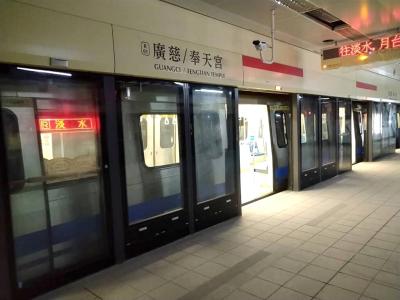
The New Taipei Metro's Sanyin Line and the eastern extension of the Taipei Metro's Tamsui-Xinyi Line (Red Line) are scheduled to begin operations in June, the National Development Council said today. The Red Line, which terminates at Xiangshan Station, would be connected by the 1.4km extension to a new eastern terminal, Guangci/Fengtian Temple Station, while the Sanyin Line would link New Taipei City's Tucheng and Yingge stations via Sanxia District (三峽). The council gave the updates at a council meeting reviewing progress on public construction projects for this year. Taiwan's annual public infrastructure budget would remain at NT$800 billion (US$25.08 billion), with NT$97.3


 RSS
RSS