


A township in Tainan City is offering a motorcyclist education program to foreign spouses who do not read Chinese, and reports a 70 percent passing rate for students who have completed the program.
Wennan Township (
"Most of the students are Vietnamese wives, as in the Vietnamese society women often take up the role of family breadwinner or head of the house; other students are Indonesian and Chinese," Chiu Su-chen (邱素禛), the township secretary who is in charge of organizing the program, said on Sunday.
Vietnamese wives often need to ride a motorcycle to pick up their children from school, to get to work or to go grocery shopping.
In order to help foreign spouses who can't read or write Chinese to pass their written test, during the week-long program, questions are read out loud in Chinese by instructors and the students simply answer yes or no, or pick the right answer on answer sheets.
In addition, the students also learn practical motorcycle-riding skills in the program.
Additionally, the program has been able to help spouses from China that are unable to take written tests -- because of either illiteracy or an inability to read traditional Chinese characters.
After receiving special approval from the local Department of Motor Vehicles (DMV), the usual computerized test has been replaced by an oral test conducted by a DMV official.
The rate of program students obtaining their motorcyclist licenses is high.
"According to the DMV, the rate of a foreign spouse passing the test without taking our program is about 20 percent; however, the pass rate for our students has reached as high as 70 percent," Chiu said.
"Many students said that passing the test felt better than getting married!" Chiu said.
Before the program was initiated, officials had considered conducting the written test in Vietnamese, but in order to give foreign spouses more motivation to learn Chinese, the township chief, Chen Chin-chuan (
The township initiated the program after being approached by Tainan City's Overseas Vietnamese Association last year.
The program charges its students a basic fee of NT$500 for every two days to cover space rental and instructors' fees.
Students who only wish to attend the actual riding sessions are charged NT$750 for the entire program.
Those caught riding a motorcycle without a proper license face a fine of NT$6,000. As such, many foreign spouses feel that the program fees are a good investment.
Seeing the success rate of the motorcyclist education program, the township is planning to start a driver's license program in the near future.

The first global hotel Keys Selection by the Michelin Guide includes four hotels in Taiwan, Michelin announced yesterday. All four received the “Michelin One Key,” indicating guests are to experience a “very special stay” at any of the locations as the establishments are “a true gem with personality. Service always goes the extra mile, and the hotel provides much more than others in its price range.” Of the four hotels, three are located in Taipei and one in Taichung. In Taipei, the One Key accolades were awarded to the Capella Taipei, Kimpton Da An Taipei and Mandarin Oriental Taipei. Capella Taipei was described by
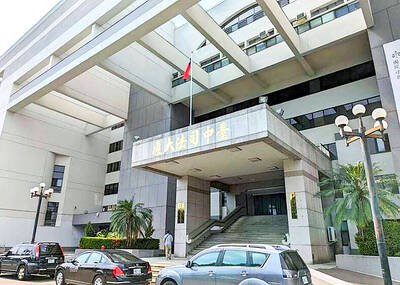
The Taichung District Court yesterday confirmed its final ruling that the marriage between teenage heir Lai (賴) and a man surnamed Hsia (夏) was legally invalid, preventing Hsia from inheriting Lai’s NT$500 million (US$16.37 million) estate. The court confirmed that Hsia chose not to appeal the civil judgement after the court handed down its ruling in June, making the decision final. In the June ruling, the court said that Lai, 18, and Hsia, 26, showed “no mutual admiration before the marriage” and that their interactions were “distant and unfamiliar.” The judge concluded that the couple lacked the “true intention of
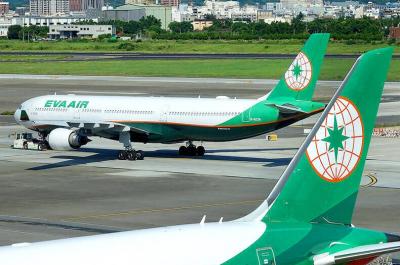
EVA Airways today confirmed the death of a flight attendant on Saturday upon their return to Taiwan and said an internal investigation has been launched, as criticism mounted over a social media post accusing the airline of failing to offer sufficient employee protections. According to the post, the flight attendant complained of feeling sick on board a flight, but was unable to take sick leave or access medical care. The crew member allegedly did not receive assistance from the chief purser, who failed to heed their requests for medical attention or call an ambulance once the flight landed, the post said. As sick
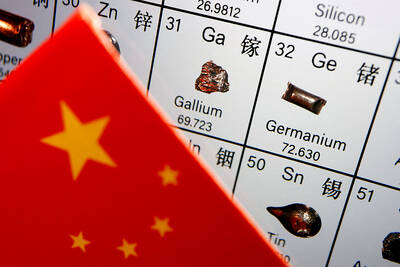
INDUSTRY: Beijing’s latest export measures go beyond targeting the US and would likely affect any country that uses Chinese rare earths or related tech, an academic said Taiwanese industries could face significant disruption from China’s newly tightened export controls on rare earth elements, as much of Taiwan’s supply indirectly depends on Chinese materials processed in Japan, a local expert said yesterday. Kristy Hsu (徐遵慈), director of the Taiwan ASEAN Studies Center at the Chung-Hua Institution for Economic Research, said that China’s latest export measures go far beyond targeting the US and would likely affect any country that uses Chinese rare earths or related technologies. With Japan and Southeast Asian countries among those expected to be hit, Taiwan could feel the impact through its reliance on Japanese-made semi-finished products and


 RSS
RSS