


China described President Chen Shui-bian (陳水扁) yesterday as "immoral" and warned Taiwanese voters not to be tempted by his pro-independence platform in the March 20 election.
"In seeking his personal re-election, Chen has put the tangible interests of the Taiwan people at stake," National People's Congress spokesman Jiang Enzhu (
"This is indeed very immoral," he said.
"We understand and respect the Taiwan compatriots' desire for developing democracy, but we firmly oppose Taiwan authorities' pursuit of Taiwan independence and any splittist activities under the cloak of democracy," Jiang said.
He said Chen had stirred up the "indignation and condemnation" of China's 1.3 billion people.
It is the latest salvo in the war of words being orchestrated by Beijing ahead of the elections.
At Wednesday's opening session of the China People's Political Consultative Conference, chairman Jia Qinglin (
"We must unswervingly uphold the one-China policy, resolutely oppose separatist activities of any sort that are designed to bring about Taiwan independence and never allow anybody to separate Taiwan from China by any means," Jia said.
But despite the obvious distaste of China's leaders for Chen, Beijing has so far appeared to approach the elections more calmly than earlier elections.
Ballistic missile tests and military exercises ahead of presidential elections in 1996 and 2000 worked to push voters away from Beijing's preferred candidate and resulted in Chen's 2000 election.
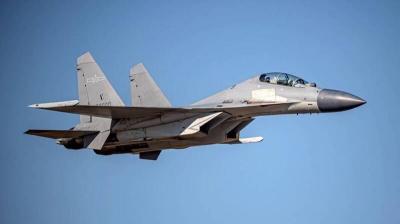
Eight Chinese naval vessels and 24 military aircraft were detected crossing the median line of the Taiwan Strait between 6am yesterday and 6am today, the Ministry of National Defense said this morning. The aircraft entered Taiwan’s northern, central, southwestern and eastern air defense identification zones, the ministry said. The armed forces responded with mission aircraft, naval vessels and shore-based missile systems to closely monitor the situation, it added. Eight naval vessels, one official ship and 36 aircraft sorties were spotted in total, the ministry said.
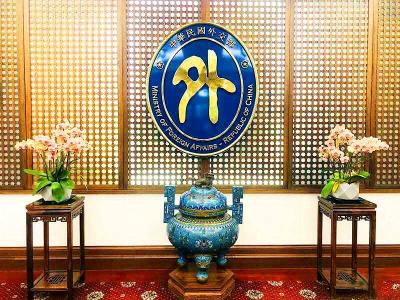
The Ministry of Foreign Affairs (MOFA) today said that if South Korea does not reply appropriately to its request to correct Taiwan’s name on its e-Arrival card system before March 31, it would take corresponding measures to alter how South Korea is labeled on the online Taiwan Arrival Card system. South Korea’s e-Arrival card system lists Taiwan as “China (Taiwan)” in the “point of departure” and “next destination” fields. The ministry said that it changed the nationality for South Koreans on Taiwan’s Alien Resident Certificates from “Korea” to “South Korea” on March 1, in a gesture of goodwill and based on the
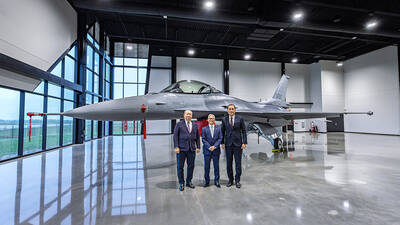
Taiwanese officials were shown the first of 66 F-16V fighter jets purchased by Taiwan from the United States, the Ministry of National Defense said yesterday, adding the aircraft has completed an initial flight test and is expected to be delivered later this year. A delegation led by Deputy Minister of National Defense Hsu Szu-chien (徐斯儉) visited Lockheed Martin’s F-16 C/D Block 70 (also known as F-16V) assembly line in South Carolina on March 16 to view the aircraft. The jet will undergo a final acceptance flight in the US before being delivered to Taiwan, the
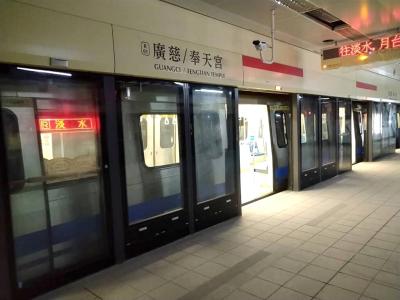
The New Taipei Metro's Sanyin Line and the eastern extension of the Taipei Metro's Tamsui-Xinyi Line (Red Line) are scheduled to begin operations in June, the National Development Council said today. The Red Line, which terminates at Xiangshan Station, would be connected by the 1.4km extension to a new eastern terminal, Guangci/Fengtian Temple Station, while the Sanyin Line would link New Taipei City's Tucheng and Yingge stations via Sanxia District (三峽). The council gave the updates at a council meeting reviewing progress on public construction projects for this year. Taiwan's annual public infrastructure budget would remain at NT$800 billion (US$25.08 billion), with NT$97.3


 RSS
RSS