


Minister of National Defense Tang Yao-ming (
The US agreed to sell Taiwan the submarines in an April 2001 arms deal, the largest weapons sale to Taiwan from the US in a decade.
Observers have said that delivering on the promised subs could be difficult, if not impossible, given that the US no longer builds diesel submarines.
Tang made the remarks when he visited the Taiwan Solidarity Union (TSU) caucus in the Legislative Yuan to solicit support for next year's defense budget.
TSU Legislator Ho Min-hao (
Ho was referring to the concept of the US allowing Taiwan's state-owned China Shipbuilding Corp (CSBC) to help with the construction of the first of the submarines and then turn over the entire project to CSBC to finish via transfer of technology.
Ho said that Tang agreed with the policy of Taiwan building the subs and said as much to Shaheen, the top US liaison official with Taiwan, who arrived in Taipei on Monday for a weeklong fact-finding trip.
Tang did not comment on Shaheen's response but said that many obstacles must be overcome for Taiwan to participate in the submarine-building project, according to Ho.
Ho also said that Tang, while explaining the defense budget, said that the defense ministry has listed C4ISR (command, control, communications, computer, intelligence, surveillance and reconnaissance) systems as its top purchase priority next year, and will include in the 2005 budget funds for the purchase of six Patriot missile batteries to upgrade the combat readiness of the nation.
During the same meeting with the TSU legislators, Tang also addressed concerns over the recent failure of the navy's torpedo test firings.
One of two torpedoes fired at a stationary, de-commissioned destroyer failed to hit its target Tuesday. Another similar test failed early last month.
Tang stressed that the navy officials in charge of the exercise are all well trained and that the problem lies with the hardware -- the torpedoes -- and not with the men who fired them.
He pointed out that torpedoes were purchased some 10 or 20 years ago, and that he had now instructed his subordinates to review the torpedo inventory regularly and test fire the torpedoes occasionally.
Tang also instructed that the purchase contracts should be reviewed to see if there is an after-sale guarantee. If it so, the ministry will seek redress, he said.
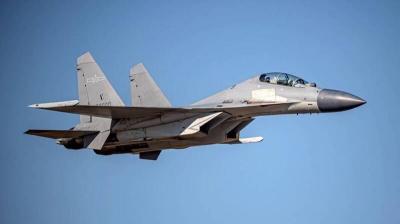
Eight Chinese naval vessels and 24 military aircraft were detected crossing the median line of the Taiwan Strait between 6am yesterday and 6am today, the Ministry of National Defense said this morning. The aircraft entered Taiwan’s northern, central, southwestern and eastern air defense identification zones, the ministry said. The armed forces responded with mission aircraft, naval vessels and shore-based missile systems to closely monitor the situation, it added. Eight naval vessels, one official ship and 36 aircraft sorties were spotted in total, the ministry said.
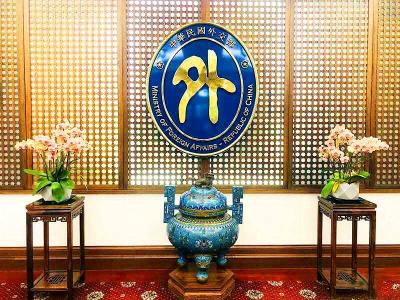
The Ministry of Foreign Affairs (MOFA) today said that if South Korea does not reply appropriately to its request to correct Taiwan’s name on its e-Arrival card system before March 31, it would take corresponding measures to alter how South Korea is labeled on the online Taiwan Arrival Card system. South Korea’s e-Arrival card system lists Taiwan as “China (Taiwan)” in the “point of departure” and “next destination” fields. The ministry said that it changed the nationality for South Koreans on Taiwan’s Alien Resident Certificates from “Korea” to “South Korea” on March 1, in a gesture of goodwill and based on the
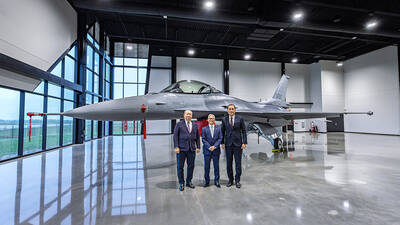
Taiwanese officials were shown the first of 66 F-16V fighter jets purchased by Taiwan from the United States, the Ministry of National Defense said yesterday, adding the aircraft has completed an initial flight test and is expected to be delivered later this year. A delegation led by Deputy Minister of National Defense Hsu Szu-chien (徐斯儉) visited Lockheed Martin’s F-16 C/D Block 70 (also known as F-16V) assembly line in South Carolina on March 16 to view the aircraft. The jet will undergo a final acceptance flight in the US before being delivered to Taiwan, the
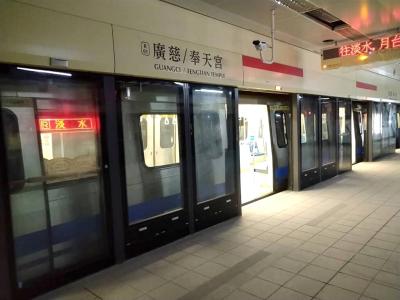
The New Taipei Metro's Sanyin Line and the eastern extension of the Taipei Metro's Tamsui-Xinyi Line (Red Line) are scheduled to begin operations in June, the National Development Council said today. The Red Line, which terminates at Xiangshan Station, would be connected by the 1.4km extension to a new eastern terminal, Guangci/Fengtian Temple Station, while the Sanyin Line would link New Taipei City's Tucheng and Yingge stations via Sanxia District (三峽). The council gave the updates at a council meeting reviewing progress on public construction projects for this year. Taiwan's annual public infrastructure budget would remain at NT$800 billion (US$25.08 billion), with NT$97.3


 RSS
RSS