


When most countries confront difficulties surrounding the loss of biodiversity, global environmental changes, invasions of alien species and bioterrorism, they often find it useful to compare their own problems with those of other nations.
In Taiwan, the situation is no different.
The recent completion of the first ecology-grid system at the Taiwan Forestry Research Institute's (TFRI) Fushan Research Station (

PHOTO: CHIANG YING-YING
By working with the National Center for High-performance Computing (NCHC) under the National Science Council (NSC), results of research and observations carried out by ecologists at the 1,100-hectare research site can be made available to counterparts overseas by way of the eco-grid system.
Wei Yau-huei (
The NSC-sponsored Taiwan Ecological Research Network (TERN) was established in 1992. The network includes council scientists who cooperate with universities and the TFRI. So far, the network has established five research sites -- northern Fushan, Yuanyang Lake, central Guan-daushi, Tatachia and Nanjen Mountain on Taiwan's southern tip.
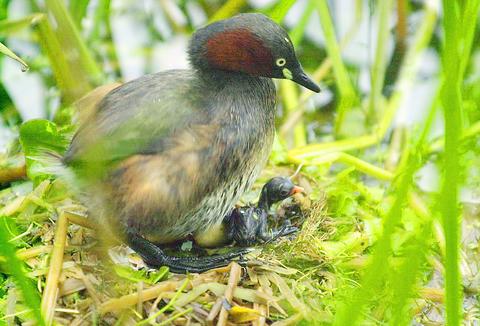
PHOTO: CHIANG YING-YING
"The cooperation between TERN and NCHC in establishing the eco-grid system demonstrates that Taiwan is willing to shoulder its responsibility for preserving biodiverstiy," TFRI director-general Yang Jeng-chuan (
According to NCHC officials, increased network bandwidth, more powerful computers and the popularization of the Internet have driven an increasing demand for more high-tech solutions in sectors ranging from commercial enterprise to academic institutions and research organizations.
According to NCHC director Joe Juang (
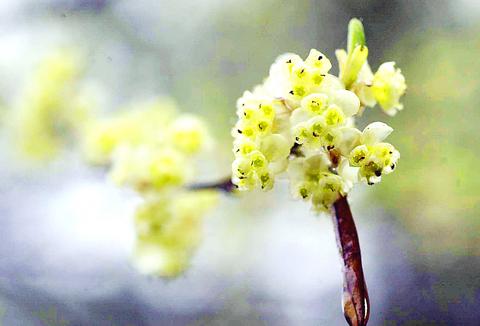
PHOTO: CHIANG YING-YING
Grid computing, however, requires powerful, reliable, high performance systems and sophisticated software.
Connected to the Pacific Rim Applications & Grid Middleware Assembly (PRAGMA), a unique collaboration among Asian Pacific countries and supported by the US National Science Foundation, Taiwan's eco-grid system has become part of the first attempt to bring long-term ecological research to the international community.
Other webmasters involved include Long-Term Ecological Research (LTER), the San Diego Supercomputer Center, US High Performance Wireless Research and Education Network and Japan National Agricultural Research Organization.
"The eco-grid system at Fushan enables researchers in Taiwan to do comparative studies between Fushan and other parts of the world," said Peter Arzberger, director of National Biomedical Computation Resource at University of California in San Diego.
For the grid to work, and to truly understand and then create a sustainable environment, a global approach will be needed, Arzberger said.
Illustrating other data-sharing systems, including the EU-Data Grid in Europe and TeraGrid in the US, Arzberger said that the promotion of such projects rely on well-established partnerships between research, industry, government and educators at local, national and global levels.
Lin Fang-pang (
"Ecologists can efficiently analyze activities of animals and plants by reading image data transmitted from cameras on the field to indoor computers without making long and difficult journeys to research sites," Lin said.
In the last three months, Lin said, the system has successfully shot the activities of wild boars, macaques, Formosan Reeves munt-jacs (台灣山羌) and other wild animals. The NCHC plans to replace the existing system with wireless communication facilities to collect data and expand monitored areas into places researchers cannot reach, Lin said.
Officials said the eco-grid system can carry out data-analysis tasks on the long-term monitoring of soil erosion and channel sedimentation, and the dynamics of animal communities of all shapes and sizes.
The eco-grid system is also due to be established at TERN's other research sites.
NCHC director Juang said Fushan was chosen to test drive the eco-grid system because of its biodiversity. More than one-third of Taiwan's plant and animal species are represented at Fushan.
Called by locals "the accessible paradise," Fushan is famous for its abundant natural beauty.
"Here you can see naughty macaques riding on meek muntjacs, or waterfowls flying over the lake" said Huang Shu-mei (
Leading a pack of reporters around the research site last week, Huang said limiting visitors to 400 a day has led to the preservation of the fragile ecological systems at Fushan. Accordingly, visitors have to book reservations 30 days in advance and the site remains closed for one or two months each year to give the animals some peace and quiet during breeding season.
Walking by a lake, Huang lowered her voice to point out a little grebe (
Researchers said they often enjoy chewing the fruits of the acronychia pedunculata (
The fruit is also a favorite of monkeys and other animals at Fushan.
With an average annual rainfall of 3,800mm, Fushan's humid environment allows a number of native plants to thrive, such as Lagerstroemia subcostata koehne (九芎) and white magau (白色山胡椒), and many kinds of rhododendron.
To boost their collection of plants and preserve endangered species, researchers also transplant foreign species to Fushan.
Researchers said each plant at the station has a card designating its origin, history other information.
Taking Wulai rhododendron (烏來杜鵑) as an example, Lin Kuo-chuan (林國銓), a scientist at the division of silviculture of the TFRI, said its habitats along Peishih River (北勢溪) had been inundated by water due to the establishment of the Feitsui Reservoir in Taipei County in 1987.
"The species only may exist here now because no records suggest that it has been seen in the field in the last decade," Lin said.
King Hen-biau (金恆鑣), a TFRI scientist who helped to found the TERN, said results of long-tern studies aimed at understanding ecological systems in Taiwan could provide crucial information for policy-makers to design sound policies on eco-system management.
Despite ecologists' hard work in linking research results with the international community, King said poor conservation education in Taiwan is compromising the result. Illegal hunting at Fushan is just one example, he said.
According to Chiou Wen-liang (
Chiou said hunters sneaked into the site to kill the inquisitive animals, which are relatively unafraid of humans.
Illegal hunting remains a long-term problem at Fushan, Chiou said, and animals are innocently sacrificed for to feed a voracious appetite for meat in Taiwan.
Chiou said that to promote ecological conservation, workshops had been held in townships nearby but their effectiveness has been limited.
"Illegal hunting leads not only to loss of life but also to the loss of data on long-term ecological research," Chiou said.
TFRI director-general Yang criticized the government for its failure to control illegal hunting.
"To give consideration to both ecological conservation and Aboriginal cultural preservation, the government should designate hunting seasons in certain mountainous areas based on breeding activities," Yang said.
Officials at the NCHC are now considering adding surveillance instruments into the wireless eco-grid system at Fushan.
Due to funding and manpower constraints, however, that realization depends on the cooperation of the high-tech industry. Currently, the hidden cameras installed at Fushan are borrowed from high-tech firms.
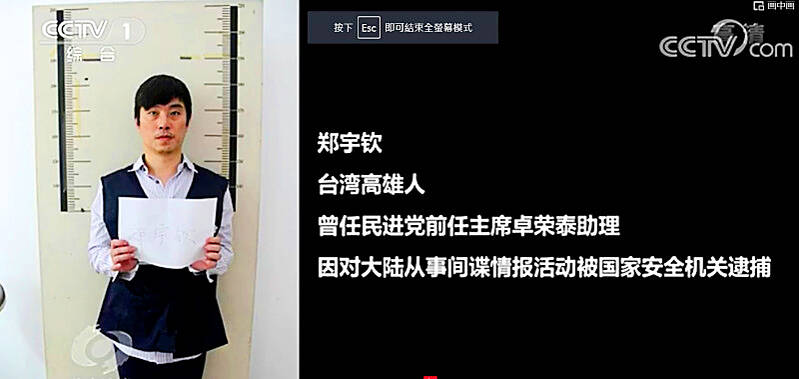
Former Czech Republic-based Taiwanese researcher Cheng Yu-chin (鄭宇欽) has been sentenced to seven years in prison on espionage-related charges, China’s Ministry of State Security announced yesterday. China said Cheng was a spy for Taiwan who “masqueraded as a professor” and that he was previously an assistant to former Cabinet secretary-general Cho Jung-tai (卓榮泰). President-elect William Lai (賴清德) on Wednesday last week announced Cho would be his premier when Lai is inaugurated next month. Today is China’s “National Security Education Day.” The Chinese ministry yesterday released a video online showing arrests over the past 10 years of people alleged to be

THE HAWAII FACTOR: While a 1965 opinion said an attack on Hawaii would not trigger Article 5, the text of the treaty suggests the state is covered, the report says NATO could be drawn into a conflict in the Taiwan Strait if Chinese forces attacked the US mainland or Hawaii, a NATO Defense College report published on Monday says. The report, written by James Lee, an assistant research fellow at Academia Sinica’s Institute of European and American Studies, states that under certain conditions a Taiwan contingency could trigger Article 5 of NATO, under which an attack against any member of the alliance is considered an attack against all members, necessitating a response. Article 6 of the North Atlantic Treaty specifies that an armed attack in the territory of any member in Europe,
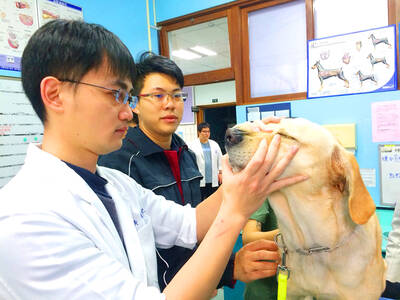
LIKE FAMILY: People now treat dogs and cats as family members. They receive the same medical treatments and tests as humans do, a veterinary association official said The number of pet dogs and cats in Taiwan has officially outnumbered the number of human newborns last year, data from the Ministry of Agriculture’s pet registration information system showed. As of last year, Taiwan had 94,544 registered pet dogs and 137,652 pet cats, the data showed. By contrast, 135,571 babies were born last year. Demand for medical care for pet animals has also risen. As of Feb. 29, there were 5,773 veterinarians in Taiwan, 3,993 of whom were for pet animals, statistics from the Animal and Plant Health Inspection Agency showed. In 2022, the nation had 3,077 pediatricians. As of last

XINJIANG: Officials are conducting a report into amending an existing law or to enact a special law to prohibit goods using forced labor Taiwan is mulling an amendment prohibiting the importation of goods using forced labor, similar to the Uyghur Forced Labor Prevention Act (UFLPA) passed by the US Congress in 2021 that imposed limits on goods produced using forced labor in China’s Xinjiang region. A government official who wished to remain anonymous said yesterday that as the US customs law explicitly prohibits the importation of goods made using forced labor, in 2021 it passed the specialized UFLPA to limit the importation of cotton and other goods from China’s Xinjiang Uyghur region. Taiwan does not have the legal basis to prohibit the importation of goods


 RSS
RSS