


The failure of some government officials to answer legislative inquiries triggered a heated debate between ruling and opposition lawmakers yesterday, with Premier Yu Shyi-kun seeking to stay above the fray.
Opposition legislators said they could not effectively exercise legislative oversight in the absence of Cabinet ministers they invite to committee meetings. But their DPP counterparts doubted the necessity of having government officials attend all those forums, many of which are aimed at embarrassing them.
KMT Legislator Yang Chiung-ying (
"I suggest punishing the former by holding them in contempt of the legislature," Yang said, challenging the latter to attend the sessions.
Saying they are fed up with the administration's disrespect, leaders from the opposition KMT and PFP caucuses walked out of a cross-party talk Monday afternoon and have shut down all negotiations.
"Since the session began [in February], the DPP administration has been trampling on the legislature," PFP Legislative Whip Diane Lee (李慶安) said. "We find it meaningless to conduct cross-party talks before the problem is addressed."
Earlier, the four legislative caucuses had agreed to decide tomorrow whether to unfreeze a monthly stipend for senior citizens, among other policy issues that the Cabinet has tagged as priority.
Going a step further, KMT Legislator Kwan Yuk-noan (
Chen has declined four invitations to testify before legislative committees in the last two months on grounds none of his KMT predecessors ever set foot in the lawmaking body.
Also top on the list of no-shows are National Security Bureau Director Tsai Chao-ming (
Defending the administration, DPP Legislator Kou Wen-chen (
"How can the government concentrate on boosting the economy if its officials have to partake in political stunts staged by opposition lawmakers," Kuo asked.
DPP Legislative Whip Hsu Jung-shu (許榮淑) echoed the concern, noting that all Cabinet ministers have to attend full-house interpellation sessions twice a week already.
"They will have little time for policy-making if they have to take part in committee discussions as well as meetings held by various subgroups," Hsu said.
The 12 legislature's standing committees meet three times a week.
Wang Tuoh (王拓), another DPP lawmaker, said his party has asked Legislative Speaker Wang Jin-pyng (王金平) to help end the stalemate but estimated it would take some time before the opposition would return to the negotiating table.
The premier, known for his humility, compared himself to a traditional daughter-in-law in Taiwanese society, when asked to comment on the latest partisan spat.
"When the mother-in-law is giving admonitions, the daughter-in-law had better listen quietly," Yu said. "So I find it well-advised for me not to say anything on the matter."
* Secretary-General Chen Shih-meng has declined four invitations to testify before legislative committees in the last two months on grounds that none of his KMT predecessors ever set foot in the lawmaking body.
* Opposition legislators said they could not effectively exercise legislative oversight in the absence of Cabinet ministers they invite to committee meetings.
* The DPP doubts the need to have government officials attend all committee forums, many of which are aimed at embarrassing them.
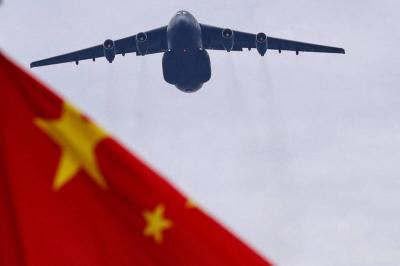
Beijing could eventually see a full amphibious invasion of Taiwan as the only "prudent" way to bring about unification, the US Department of Defense said in a newly released annual report to Congress. The Pentagon's "Annual Report to Congress: Military and Security Developments Involving the People's Republic of China 2025," was in many ways similar to last year’s report but reorganized the analysis of the options China has to take over Taiwan. Generally, according to the report, Chinese leaders view the People's Liberation Army's (PLA) capabilities for a Taiwan campaign as improving, but they remain uncertain about its readiness to successfully seize

Taiwan is getting a day off on Christmas for the first time in 25 years. The change comes after opposition parties passed a law earlier this year to add or restore five public holidays, including Constitution Day, which falls on today, Dec. 25. The day marks the 1947 adoption of the constitution of the Republic of China, as the government in Taipei is formally known. Back then the Chinese Nationalist Party (KMT) governed China from Nanjing. When the KMT, now an opposition party in Taiwan, passed the legislation on holidays, it said that they would help “commemorate the history of national development.” That
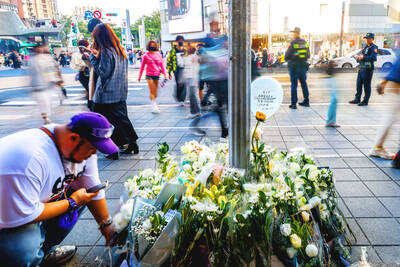
HORROR STORIES: One victim recounted not realizing they had been stabbed and seeing people bleeding, while another recalled breaking down in tears after fleeing A man on Friday died after he tried to fight the knife-wielding suspect who went on a stabbing spree near two of Taipei’s busiest metro stations, Taipei Mayor Chiang Wan-an (蔣萬安) said. The 57-year-old man, identified by his family name, Yu (余), encountered the suspect at Exit M7 of Taipei Main Station and immediately tried to stop him, but was fatally wounded and later died, Chiang said, calling the incident “heartbreaking.” Yu’s family would receive at least NT$5 million (US$158,584) in compensation through the Taipei Rapid Transit Corp’s (TRTC) insurance coverage, he said after convening an emergency security response meeting yesterday morning. National

Taiwan has overtaken South Korea this year in per capita income for the first time in 23 years, IMF data showed. Per capita income is a nation’s GDP divided by the total population, used to compare average wealth levels across countries. Taiwan also beat Japan this year on per capita income, after surpassing it for the first time last year, US magazine Newsweek reported yesterday. Across Asia, Taiwan ranked fourth for per capita income at US$37,827 this year due to sustained economic growth, the report said. In the top three spots were Singapore, Macau and Hong Kong, it said. South


 RSS
RSS