


Main ingredients:
Pork ribs 680g
Rice wine 300g
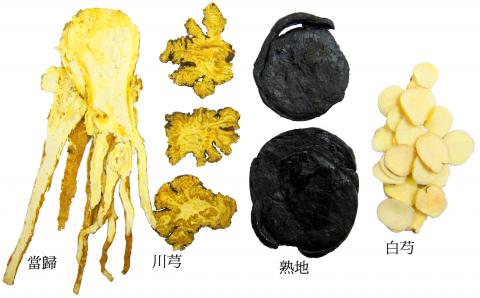
Photo courtesy of Lee Yan-tung
照片:李炎東
A dash of salt
Medicinal herbs:
Angelica sinensis, one piece
Chuan hsiung rhizome, 12g
White peony root, 10g
Codonopsis root, 10g
Wolfberry, 3g
Poria cocus fungus, 15g
Atractylodes rhizome, 12g
Cinnamon, 5g
Chinese foxglove, half piece
Black date, one
主料:
排骨六百八十公克
米酒三百公克
鹽少許
中藥材:
當歸一片
川芎十二公克
白芍十公克
黨參十公克
枸杞三公克
茯苓十五公克
白朮十二公克
肉桂五公克
熟地半片
黑棗一粒
Cut the ribs into chunks, wash, and blanch them in boiling water for several minutes. Remove, then clean scum from surface of water.
Wash the medicinal herbs, then place into a pouch and tie with a piece of string.
Place the blanched ribs into the wok, and add the medicinal ingredients and rice wine, together with 1,200g water.
Place on gas hob and bring liquid to the boil, then turn heat down and simmer for approximately 60 mins. Turn off the heat, discard the pouch of medicinal herbs, and add a dash of salt.
If the pouch of medicinal herbs is left to simmer or stew for too long it could turn the soup bitter.
排骨切塊、洗淨,放入滾水中汆燙後取出,將表面泡沫洗淨。
中藥材洗淨,裝入紗布袋中,束口綁緊。
排骨放入鍋中,加入中藥包及米酒、水1,200g。
置於瓦斯爐上加熱至沸騰,轉小火燉煮約60分鐘,關上爐火、撈出藥包,加入少許鹽調味即可。
藥包不可燉煮及浸泡太久,否則湯汁容易反苦。
Medicinal herb simmering times
There is a common misconception that the longer you simmer Chinese medicinal herbs, the more effective they are, but actually this is not the case. If you are using ingredients such as angelica sinensis, ginseng, red dates or wolfberry, you can just simmer them together with the rest of the ingredients, until the latter are cooked. If you are adding large amounts of aromatic ingredients, it would be best to prepare the stock in advance — which generally requires only 30 mins — and then add to the rest of the ingredients and stew until cooked. If the medicinal ingredients are simmered for too long, for over 90 mins, they will become bitter, tainting the taste of the soup and the other ingredients.
It is better to use ceramic or earthenware pots. With iron or aluminum cookware, the metal ions may have a chemical reaction with the medicinal ingredients if simmered for a long time, and this can affect the efficacy of the herbs.
(Paul Cooper, Taipei Times)
藥膳燉煮時間
一般人對於燉煮中藥材會有燉越久越有效的迷思,其實並非如此!如果只是簡單加些當歸、參鬚、紅棗、枸杞等,可直接與食材一起燉煮,時間長短則視食材是否熟透。若是加了多味大補中藥材,會建議先熬出藥湯,通常僅需一小時,再加入食材一起燉煮至熟透。若是過度熬煮,超過一個半小時,還會反苦,影響湯汁、食材口感。
另外,使用的器皿建議以陶瓷、砂鍋等為主,因為如果用鐵鍋、鋁鍋,長時間煮之下,鍋中的金屬離子容易和中藥起化學反應、影響藥效。
(自由時報)
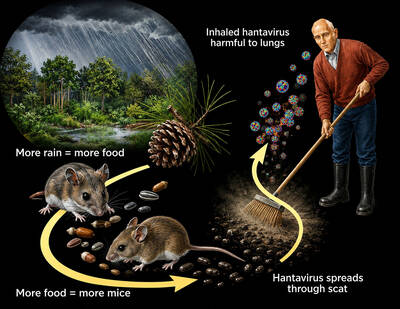
An outbreak aboard a cruise ship of a rare rodent-borne illness called hantavirus has left three passengers dead and sickened others, but global health officials say the risk to the general public remains low because the germ does not easily spread between people. “This is not the next COVID, but it is a serious infectious disease,” said Maria Van Kerkhove, director of epidemic and pandemic preparedness at the World Health Organization (WHO). “Most people will never be exposed to this.” The virus usually spreads when people inhale contaminated residue of rodent droppings. Hantaviruses have been around for centuries and are thought to

Have you ever wondered how people navigate the world when they can’t see a map? For individuals with visual impairments, conventional maps are nearly impossible to use. This is where tactile maps come in — essential tools that allow people to “see” the world through touch. A tactile map is specially designed with raised lines, textures, and symbols to represent geographical features such as roads, rivers, and buildings. Users explore it with their fingertips. However, these maps are not exclusively for people with visual disabilities. They serve as valuable multisensory learning tools that enhance spatial understanding for everyone, making

1. 他病了三天。 ˇ He has been sick for three days. χ He has been sick since three days. 註︰這裡現在完成時態 have / has been 表示從過去某一時日到現在的一段時間存在的行為或狀態,與它連用的時間副詞應為 「for +若干時」,如 for a year, for three hours 等,意思是歷時多少。 2. 他自從星期三以來都很忙。 ˇ He has been busy since Wednesday. χ He has been busy from Wednesday. 註︰「自從……以來」,該用 since。說從某一天(某一時刻)到某一天(某一時刻)才用 from,如 from Monday till Friday。 3. 房間角落裡散放著一些零星物件。 ˇ There were some odds and ends lying in the corner of the room. χ There were some odds and ends lying at the corner of the room. 註︰「在房間角落裡」該用介詞 in。例如: He stood in the corner. There is a lamp in the corner of the room. at the corner 指房子外部的拐角。例如: A little boy

A growing green movement allows hotel guests to fund tree planting projects simply by opting out of daily room cleans. This approach turns an ordinary hotel stay into a direct contribution to nature. Founded in the Netherlands, the nonprofit “Hotels for Trees” operates on the principle that one skipped cleaning equals one new tree. It has planted more than 750,000 trees since 2021. Similarly, Sarnia Hotels in Guernsey donates £2 per refused clean. Since 2024, over 3,300 services have been cancelled, raising sufficient money to plant 1,100 native trees and hedgerows. Simplicity has been central to this success.


 RSS
RSS