


Legislative Speaker Wang Jin-pyng (王金平) yesterday pledged loyalty to the Chinese Nationalist Party (KMT) upon his return to Taiwan and accused the Special Investigation Division (SID) of conducting a one-sided investigation into accusations of influence-peddling against him that have “misled” President Ma Ying-jeou (馬英九).
Speaking to hundreds of supporters at Taiwan Taoyuan International Airport, Wang denied that he had interfered with the judiciary and said the division’s investigation and its disclosure and distribution of his telephone records was illegal and unconstitutional.
“I’m back now and ready to give my statement. Hopefully, the president will not be deceived by the unilateral and incorrect information he has been given by the SID,” Wang said.
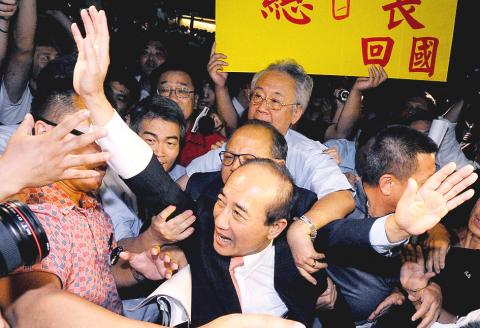
Photo: Taipei Times
Wang has been in Malaysia to attend the wedding of one of his daughters since Friday, the day that division announced his alleged misconduct in a press conference.
Responding to the legislative speaker’s statement, presidential spokesperson Lo Chih-chiang (羅智強) told a 10pm press conference that Ma “was disappointed with Wang’s statement,” because he had evaded the allegations altogether.
The SID on Friday accused Wang, former minister of justice Tseng Yung-fu (曾勇夫) and High Prosecutors’ Office Head Prosecutor Chen Shou-huang (陳守煌) of influence peddling on behalf of DPP Legislator Ker Chien-ming (柯建銘).
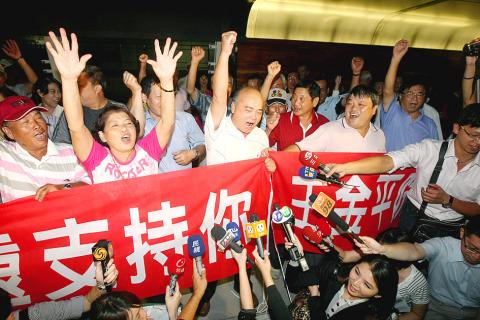
Photo: CNA
Tseng subsequently resigned, but insisted he was not guilty.
Ma has described Wang’s alleged influence peddling as “the most shameful day in Taiwan’s democratic history” and the KMT was reportedly mulling expelling Wang, which could strip him of his position as legislative speaker.
Wang called for the committee to “avoid making the same mistake of unilateralism as the SID” when it reviews the case, adding that the division had not questioned him once during the entire investigation.
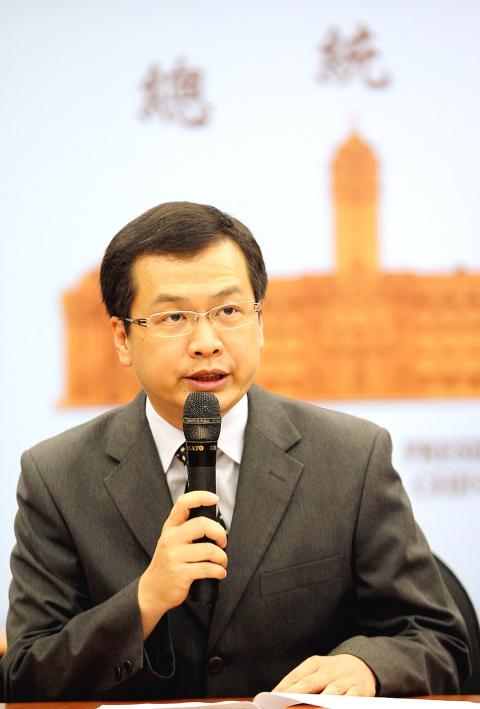
Photo: CNA
Wang neither resigned from his post as speaker or KMT member, nor launched any retaliation against Ma or the party.
In his statement, Wang reiterated that he had always been a staunch supporter of the KMT and a member who would do everything to perform his duties.
The telephone conversation with Tseng and Chen that the SID based its accusations on had been about prosecutors’ abuse of power, which was a concern of lawmakers, not a bid to influence an individual case, Wang said.
The senior politician spent a large part of his statement accusing the SID of going beyond its authorization, as the division “was only authorized to probe into corruption cases of the presidents of the five government branches.”
Ker cited Wang’s speech in a separate press release last night as proof that there was no misconduct between the two and called for Ma to apologize for initiating the political turmoil and abolish the SID.
A number of KMT lawmakers, including Deputy Speaker Hung Hsiu-chu (洪秀柱), showed their support by welcoming Wang at the airport.
Earlier yesterday, Ma said he could “not just sit by” as the case unfolds, because Wang’s alleged misconduct was “intolerable.”
Citing the president’s statements, Presidential Office Deputy Secretary-General Lo Chih-chiang (羅智強) gave a statement at an impromptu press conference in response to former KMT chairman Lien Chan (連戰), who had criticized Ma in an angry statement given through his assistant, Ting Yuan-chao (丁遠超).
“We hope that Lien understands that the public has high expectations of a judiciary free from any political influence,” Lo said.
The involvement of a legislative speaker in influence peddling was not something Ma said he could just endure, Lo said.
Ting said Lien was unhappy with how Ma handled the case, referring to Sunday’s press conference where Ma explicitly said Wang had meddled in judicial affairs before Wang had a chance to explain himself.
Prosecutor-General Huang Shih-ming (黃世銘) told a press conference at 10pm that Wang had “avoided” responding to the SID’s accusations.
The investigation conducted by the SID was conducted in line with the law and the Constitution, Huang said, dismissing Wang’s allegations that the SID illegally tapped Ker’s phone and illegally made public the transcript of the wiretapping.
Huang reiterated that the SID has presented “strong evidence,” as shown in the transcript of the wiretapping and communications record between Wang and Tseng, and Wang and Chen, to prove that Wang was involved in the case.
On Friday, the SID disclosed its investigation alleging that Wang had lobbied for Ker in a breach of trust lawsuit.
Lien was quoted by Ting as saying that Ma should not have humiliated Wang because Wang, who has 30-plus years of service in the legislature and as speaker, should be given the basic minimum of respect he deserves.
“Why did Ma quickly jump to conclusions when Wang had not had an opportunity to explain himself, and when the other people involved in the case gave conflicting accounts of the matter and the full picture remained unclear?” Lien was quoted as saying.
Lien urged Ma to handle the case according to the principles of party solidarity, societal harmony and national stability to avoid turmoil, Ting said.
Lo said it was not Ma who had disrespected Wang, “but Wang who did not respect the judiciary.”
“We have to say this: President Ma did not intend to humiliate Wang. Rather, it was Wang who brought shame on the judiciary when he made the phone calls [to Chen and Tseng],” Lo said.
Lo then directed two questions at Lien: “If a legislative speaker is permitted to meddle in a lawsuit and is not held responsible for undermining the credibility of the judicial system which is supposed to defend social justice, will the country still remain stable?” and, “If a legislative speaker is permitted to meddle in a lawsuit and is not held responsible, can the KMT still make itself acceptable to the people and to its members and can the party maintain unity? Could it be that KMT members are willing to unite in a party where influence peddling is permissible?”
Meanwhile, Hung was rumored to be Ma’s first choice to replace Wang as head of the legislature.
A high-level official at the Presidential Office who requested anonymity told reporters last night that the idea of Hung leading the legislature was “not bad,” praising Hung for her “integrity” and “being loyal to the KMT.”
The official said he did not see any reason why the legislature should become dysfunctional without Wang’s leadership.
“Over the past 15 years, the nation has been under stewardship of three presidents. In a democracy, there is no position that must be occupied by a certain person,” he said.
It was rumored that Hung would pair up with KMT Legislator Lin Hung-chih (林鴻池), the party’s Policy Committee chief, in an election for speaker and deputy speaker if Wang were expelled from the party.
The KMT’s Disciplinary Committee is to meet to determine Wang’s fate at 9:30am today, KMT spokesman Yin Wei (殷瑋) said, as Hung and Lin remained tight-lipped over the issue.
Speaking on condition of anonymity, a KMT lawmaker who is close to Hung said that party leaders might have miscalculated that Hung would obey their orders to invoke police power to force through bills in the legislature because she was also opposed to the use of police power in the legislature.
Meanwhile, Premier Jiang Yi-huah (江宜樺) yesterday reiterated a strong hint that Wang should resign as speaker because he was no longer qualified for the position now that his integrity is in doubt.
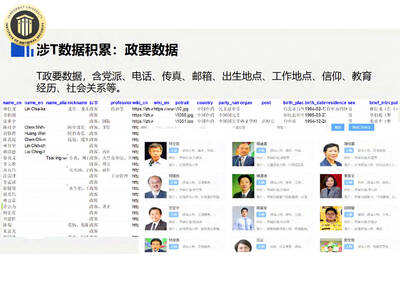
NETWORK-MAPPING PROJECT: The database contains 170 detailed files of Taiwanese politicians and about 23 million records of household registration data in Taiwan China has developed a network-mapping project targeting political figures and parties in Taiwan to monitor public opinion during elections and to craft tailored influence campaigns aimed at dividing Taiwanese society, according to documents leaked by Chinese technology firm GoLaxy (中科天璣). The documents, collected by Taipei-based Doublethink Lab, showed a database was specifically created to gather detailed information on Taiwanese political figures, including their political affiliations, job histories, birthplaces, residences, education, religion and a brief biography about them. Several notable Taiwanese politicians are in the database, including President William Lai (賴清德), former president Tsai Ing-wen (蔡英文), Minister of Foreign Affairs Lin Chia-lung (林佳龍),

KEY INDUSTRY: The vice premier discussed a plan to create a non-red drone supply chain by next year, which has been allocated a budget of more than NT$7.2 billion The government has budgeted NT$44.2 billion (US$1.38 billion) to cultivate Taiwan’s uncrewed aerial vehicle (UAV) industry over the next five years, which would make the nation a major player in the industry’s democratic supply chain in the Asia-Pacific region, Premier Cho Jung-tai (卓榮泰) said yesterday. Cho made the remarks during a visit to the facilities of Cub Elecparts Inc (為升電裝). Democratic Progressive Party (DPP) Legislator Chen Su-yueh (陳素月) and Chinese Nationalist Party (KMT) Legislator Hsieh Yi-fong (謝依鳳) also participated in the trip. Cub Elecparts has transitioned from the automotive industry to the defense industry, which is the top priority among the nation’s
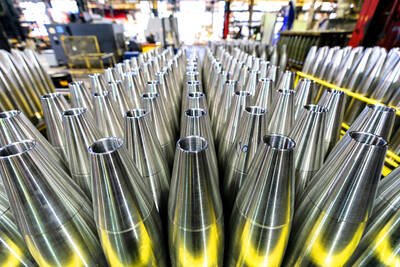
UPGRADED MISSILE: The Chungshan Institute of Science and Technology is reportedly to conduct a live-fire test of the Hsiung Feng III anti-ship missile on Thursday next week The US Army is planning to build new facilities to boost explosives production and strengthen its supply chain, a move aimed at addressing munitions shortages and supporting obligations to partners including Taiwan, Ukraine and Israel, Defense News reported. The army has issued a sources sought notice for a proposed Center of Excellence at the Blue Grass Army Depot in Kentucky, the report said. The facility would serve as a hub within the US industrial base for the production of key military explosives, including research department explosives (RDX) and high melting explosives (HMX), while also supporting research and development of next-generation materials. The proposed
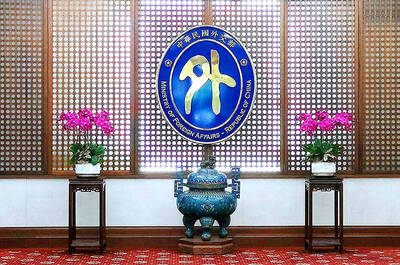
SOUTH KOREA DISPUTE: If Seoul continues to ignore its request, Taiwan would change South Korea’s designation on its arrival cards, the foreign ministry said If South Korea does not reply appropriately to a request to correct Taiwan’s name on its e-Arrival card system before March 31, the government would take corresponding measures to change how South Korea is labeled on the online Taiwan Arrival Card system, the Ministry of Foreign Affairs said yesterday. South Korea’s e-Arrival card system lists Taiwan as “China (Taiwan)” in the “point of departure” and “next destination” fields. Taipei has asked Seoul to change the wording. Since March 1, South Koreans who hold government-issued Alien Resident Certificates (ARC) have been identified as from “South Korea” rather than the “Republic of Korea,” the


 RSS
RSS