


Kaohsiung County Commissioner Yang Chiu-hsing (楊秋興) yesterday officially launched his election bid for Greater Kaohsiung mayor, a move seen as intensifying a crisis for the opposition party in a traditionally pan-green stronghold.
Yang, who lost the DPP primary in May, launched his campaign in the afternoon, telling dozens of supporters it was his “duty and responsibility” to run as an independent for mayor of Greater Kaohsiung.
“It's a very conflicting decision for me, but now I have made up my mind,” he said. “I have been asked to run by business and religious figures as well as local residents who worry about Kaohsiung falling behind. I have the determination and will to make this city a better place.”

PHOTO: HUANG CHIH-YUAN, TAIPEI TIMES
However, more than a dozen consultants with the Kaohsiung County Government resigned in protest upon learning of Yang's decision, saying they could no longer support Yang because the move went against Taiwan's interests and popular opinion.
“How could Yang make this decision when Taiwan's fate hangs in this critical [election],” said a statement signed by 13 senior consultants, including doctors, pro-independence stalwarts, a university president, a company chief executive and a radio producer.
All 13 had been handpicked by Yang, sources close to the county government said. Representatives from the group said more resignations were expected.
The group said Yang's decision gave a black eye to his political credibility because he had vowed to support the eventual winner during the party primaries. They heavily criticized his announcement, adding that it was fraught with “questionable excuses” and was unconvincing.
Their disapproval will undoubtedly come as a setback for Yang, who said during the announcement that he hoped to rise above cross-party politics and gather widespread local support.
“It's been detrimental for Taiwan to have the pan-blue and pan-green camps in constant election battles for the past decades. I'm running as an independent to try and appeal to the greatest public interest,” he told the press conference.
Asked whether he would seek support from the smaller opposition Taiwan Solidarity Union, Yang said that while he would not join any political party, he also wouldn't reject offers of support from other political figures or parties.
Initial hopes that Yang could maintain good relations with Kaohsiung County Democratic Progressive Party (DPP) councilors — many of whom had worked with him for the past nine years — appeared to have been quashed last night after DPP caucus whip Chang Han-chung (張漢忠) said Yang's decision was “truly regrettable.”
Speaking for the other county councilors, Chang said in a statement after the press conference that they “respected Yang's decision ... but it was something that no one wanted to see happen.”
Hinting that losing councilors' backing could take away Yang's grassroots base, Chang said the commissioner's political successes stemmed from the continued support of villagers and other local forces, people who were bound to be upset by his announcement.
During his press conference, Yang repeatedly said he wanted to turn Greater Kaohsiung into a “second Singapore,” adding that he would revive the region's economy, improve living standards and keep local professionals from leaving Kaohsiung.
Born to a farming family in Kaohsiung County, the 54-year-old former engineer also appealed to local sympathies, calling himself “a local boy.”
“They [other mayors] leave right after their term is up,” he said. “This is why I'm imploring the public to give me, a local boy, a chance.”
His announcement immediately touched off a storm of controversy because his very public break with both Kaohsiung Mayor Chen Chu (陳菊) and the DPP, a party that was his home for the past three decades, became official after weeks of speculation.
Chen, the DPP's candidate for Greater Kaohsiung mayor, beat Yang during the primaries by an 18 percent margin. Kaohsiung County will be merged with the city by the end of the year, creating the newly named municipality.
Sources close to Yang said it was unlikely he would back down despite DPP officials privately expressing optimism that he would change his mind before registering as a candidate next month.
Yang's entry into the race will turn the elections in Greater Kaohsiung into a three-way race with Chen and long-term Chinese Nationalist Party (KMT) Legislator Huang Chao-shun (黃昭順). The vote will take place on Nov. 27.

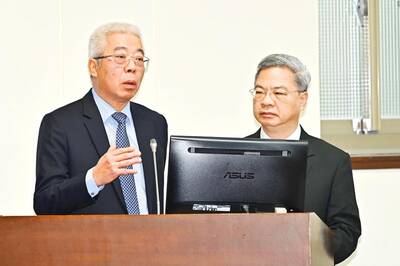
Taiwan has arranged for about 8 million barrels of crude oil, or about one-third of its monthly needs, to be shipped from the Red Sea this month to bypass the Strait of Hormuz and ease domestic supply pressures, CPC Corp, Taiwan (CPC, 台灣中油) said yesterday. The state-run oil company has worked with Middle Eastern suppliers to secure routes other than the Strait of Hormuz, through which about 20 percent of the world’s oil and liquefied natural gas typically passes, CPC chairman Fang Jeng-zen (方振仁) said at a meeting of the legislature’s Economics Committee in Taipei. Suppliers in Saudi Arabia have indicated they
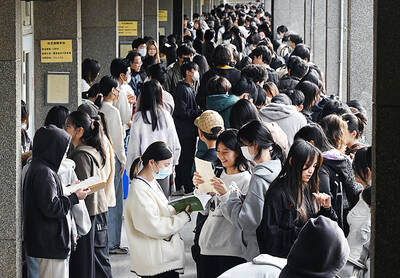
A global survey showed that 60 percent of Taiwanese had attained higher education, second only to Canada, the Ministry of the Interior said. Taiwan easily surpassed the global average of 43 percent and ranked ahead of major economies, including Japan, South Korea and the US, data from the Organisation for Economic Co-operation and Development (OECD) for 2024 showed. Taiwan has a high literacy rate, data released by the ministry showed. As of the end of last year, Taiwan had 20.617 million people aged 15 or older, accounting for 88.5 percent of the total population, with a literacy rate of 99.4 percent, the data

CCP ‘PAWN’? Beijing could use the KMT chairwoman’s visit to signal to the world that many people in Taiwan support the ‘one China’ principle, an academic said Chinese Nationalist Party (KMT) Chairwoman Cheng Li-wun (鄭麗文) yesterday arrived in China for a “peace” mission and potential meeting with Chinese President Xi Jinping (習近平), while a Taiwanese minister detailed the number of Chinese warships currently deployed around the nation. Cheng is visiting at a time of increased Chinese military pressure on Taiwan, as the opposition-dominated Legislative Yuan stalls a government plan for US$40 billion in extra defense spending. Speaking to reporters before going to the airport, Cheng said she was going on a “historic journey for peace,” but added that some people felt uneasy about her trip. “If you truly love Taiwan,

NEW LOW: The council in 2024 based predictions on a pessimistic estimate for the nation’s total fertility rate of 0.84, but last year that rate was 0.69, 17 percent lower An expected National Development Council (NDC) report expects the nation’s population to drop below 12 million by 2065, with the old-age dependency ratio to top 100 percent sooner than 2070, sources said yesterday. The council is slated to release its latest population projections in August, using an ultra-low fertility model, the sources said. The previous report projected that Taiwan’s population would fall to 14.37 million by 2070, but based on a new estimate of the total fertility rate (TFR) — the average number of children born to a woman over her lifetime — the population is expected to reach 12 million by


 RSS
RSS