


A major recall of pet food in North America has expanded to two more companies and now includes dry food for the first time, US federal health authorities and the companies said.
The Food and Drug Administration (FDA) said late on Friday it notified Hill's Pet Nutrition that tests had detected byproducts of a suspect chemical in the wheat gluten it used to make Prescription Diet m/d Feline dry food.
The FDA concluded earlier on Friday that melamine, a chemical used in fertilizers in Asia and forbidden in pet food, had been found in some wheat gluten used by a Canadian company at the center of the recall two weeks ago.
Ontario-based Menu Foods makes pet food sold under several popular labels. The FDA and Menu said the suspect wheat gluten came from a Chinese supplier, which was not identified.
Menu recalled certain batches of wet pet food last month after the products were blamed for the deaths of at least 14 animals -- mostly cats.
The FDA found that wheat gluten from the same company that supplied Menu Foods was used to make the Hill's product.
Hill's, based in Topeka, Kansas, has voluntarily recalled the product, which is sold by veterinarians.
Nestle Purina PetCare Co announced in a separate statement it was voluntarily recalling all sizes and varieties of its ALPO Prime Cuts in Gravy wet dog food with specific date codes. The Missouri-based firm said it learned on Friday that "some quantity" of wheat gluten from the same supply company linked to Menu and Hill's was used on a limited basis at one of its facilities.
Meanwhile, experts said a greater sensitivity of cats to a chemical found in plastics and pesticides could explain why they have died in larger numbers than have dogs after eating contaminated pet food, experts said.
The small number of confirmed reports of pet deaths bolstered by a far larger number of unconfirmed anecdotal reports suggests cats were more susceptible to poisoning by the chemical melamine that tainted the now recalled pet food, officials with the FDA and American Society for the Prevention of Cruelty to Animals (ASPCA) said on Saturday.
``I am concerned we have a situation where we have a sensitive species and it is the cat,'' said Steven Hansen, a veterinary toxicologist and director of the ASPCA's Animal Poison Control center in Urbana, Illinois.
Experts have not been able to explain why the chemical would have caused the kidney failure seen so far in the confirmed pet deaths, all but one in cats.

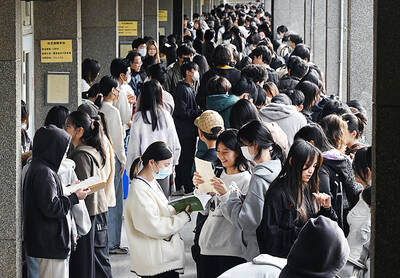
A global survey showed that 60 percent of Taiwanese had attained higher education, second only to Canada, the Ministry of the Interior said. Taiwan easily surpassed the global average of 43 percent and ranked ahead of major economies, including Japan, South Korea and the US, data from the Organisation for Economic Co-operation and Development (OECD) for 2024 showed. Taiwan has a high literacy rate, data released by the ministry showed. As of the end of last year, Taiwan had 20.617 million people aged 15 or older, accounting for 88.5 percent of the total population, with a literacy rate of 99.4 percent, the data

NEW LOW: The council in 2024 based predictions on a pessimistic estimate for the nation’s total fertility rate of 0.84, but last year that rate was 0.69, 17 percent lower An expected National Development Council (NDC) report expects the nation’s population to drop below 12 million by 2065, with the old-age dependency ratio to top 100 percent sooner than 2070, sources said yesterday. The council is slated to release its latest population projections in August, using an ultra-low fertility model, the sources said. The previous report projected that Taiwan’s population would fall to 14.37 million by 2070, but based on a new estimate of the total fertility rate (TFR) — the average number of children born to a woman over her lifetime — the population is expected to reach 12 million by

COUNTERING HOSTILITY: The draft bill would require the US to increase diplomatic pressure on China and would impose sanctions on those who sabotage undersea cable networks US lawmakers on Thursday introduced a bipartisan bill to bolster the resilience of Taiwan’s submarine cables to counter China’s hostile activities. The proposal, titled the critical undersea infrastructure resilience initiative act, was cosponsored by Republican representatives Mike Lawler and Greg Stanton, and Democratic Representative Dave Min. US Senators John Curtis and Jacky Rosen also introduced a companion bill in the US Senate, which has passed markup at the chamber’s Committee on Foreign Relations. The House’s version of the bill would prioritize the deployment of sensors to detect disruptions or potential sabotage in real-time and enhance early warning capabilities through global intelligence sharing frameworks,
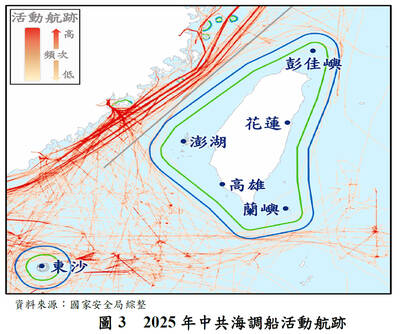
INTENSIFYING THREATS: Beijing’s tactics include massive attacks on the government service network, aircraft and naval vessel incursions and damaging undersea cables China is prepared to interfere in November’s nine-in-one local elections by launching massive attacks on the Taiwanese government’s service network (GSN), a report published by the National Security Bureau showed. The report was submitted to the Legislative Yuan ahead of the bureau’s scheduled briefing at the Foreign Affairs and National Defense Committee tomorrow. The national security team has identified about 13,000 suspicious Internet accounts and 860,000 disputed messages, the bureau said of China’s cognitive warfare against Taiwan. The disputed messages focus on major foreign affairs, national defense and economic issues, which were produced using generative artificial intelligence (AI) and distributed through Chinese


 RSS
RSS