


Perhaps nothing in medicine more aptly depicts the paradoxical statement “doing better, feeling worse” than high blood pressure. Despite an extraordinarily easy way to detect it, strong evidence for how to prevent it and proven remedies to treat it, more Americans today have undetected or poorly controlled hypertension than ever before.
The aging of the population is a reason but not the only one, said Aram Chobanian, a hypertension expert at Boston University Medical Center. As he summarized the problem in an interview and in The New England Journal of Medicine last month, Americans are too sedentary and fat. They eat too much, especially salt, but too few potassium-rich fruits and vegetables.
The makers of processed and fast foods created and persistently promote a craving for high-salt foods, even in school lunch programs. And Americans without health insurance often don’t know that their blood pressure is too high because they wait for a calamity to strike before seeking medical care.
Solutions to the blood pressure problem require broad-scale approaches — by the public, by government, by industry and by health care professionals. Several measures are similar to those that have been so effective in curbing cigarette smoking; others require better, affordable access to medical care for everyone at risk, including children and the unemployed. Still others need the cooperation of government, industry and the public to improve the American diet and enhance opportunities for health-promoting exercise.
No one claims that the solutions are cheap. But failure to fix this problem portends even greater costs down the line, because uncontrolled hypertension sets the stage for astronomically expensive heart and kidney disease and stroke — diseases that will become only more common as the population ages.
DOING THE NUMBERS
Once, the prevailing medical opinion was that lowering an elevated blood pressure was hazardous because it would deprive a person’s vital organs of an adequate blood supply. But a few pioneering medical researchers thought otherwise and eventually showed that lowering high blood pressure could prevent heart attacks, heart failure, strokes and kidney disease — and save lives.
Even then, it was long thought that the only important indicator was diastolic pressure — the bottom number, representing the pressure in arteries between heartbeats. Further studies showed that the larger top number, systolic pressure, representing arterial pressure when the heart beats, was also medically important.
And as the various studies reached fruition, it became apparent that the long-accepted numbers for desirable blood pressure were too high to protect long-term health.
Now the upper limit of normal blood pressure is listed as 120 over 80; anyone with a pressure of 140 over 90 or higher is considered hypertensive. Those with pressures in between are considered pre-hypertensive and should take steps to bring blood pressure down or, at least, prevent it from rising more.
The change mirrors what happened with serum cholesterol, for which “normal” was once listed as 240 milligrams per deciliter of blood and is now less than 200 to prevent heart disease caused by clogged arteries.
It was also long thought that blood pressure naturally rises with age. Indeed, the Framingham Heart Study showed that when 65-year-old people whose blood pressure was below 140 over 90 were followed for 20 years, about 90 percent of them became hypertensive because their arteries narrowed and stiffened with age, causing blood to push harder against artery walls.
But in many societies where obesity is rare, activity levels are high and salt intake is low, blood pressure remains low throughout life. This is the best clue we have for the lifestyle changes needed to prevent illness and premature death caused by hypertension.
Claude Lenfant, who served as director of the National Heart, Lung and Blood Institute, is 81 and has a blood pressure of 115 over 60, a level rarely found among older Americans not taking medication for hypertension. His secret: a normal body weight, 6 or more kilometers walking daily, and no salt used to prepare his meals, most of which are made from scratch at home.
In an interview, Lenfant, who now lives in Vancouver, Washington, said the problem of hypertension was rising all around the world and added that by 2020 the number of people with uncontrolled hypertension was projected to rise 65 percent. One reason is that doctors today are more likely to diagnose the problem, so it is reported more often in population surveys. “But I’m much more concerned about the fact that so much high blood pressure is not controlled,” he said, and called “therapeutic inertia” an important reason.
It is not enough for doctors to write a prescription and tell patients to return for a check-up in six months, he said. Rather, a working partnership between health care professionals and patients is needed to encourage people to monitor their pressure, adopt protective habits and continue to take medication that effectively lowers pressure.
TREATMENT AND PREVENTION
Diuretics are a first-line and inexpensive remedy, but many patients with hypertension also need other drugs to lower pressures to a desirable level.
Chobanian, whose New England Journal report was titled “The Hypertension Paradox: More Uncontrolled Disease Despite Improved Therapy,” noted that “in the majority of patients, two or more antihypertensive drugs are required to achieve target blood-pressure levels.” In the interview, he emphasized the detrimental role played by diets high in salt and calories and low in protective fruits and vegetables — a result of portions that are too large, and of too many fast and processed foods that rely on salt to enhance flavor. “Generally, the average person in our society consumes more than 10g of salt a day,” Chobanian said, “but the Institute of Medicine recommends a third of this amount as optimal.”
A new RAND Corp study finds that a one-third reduction in salt consumption could save US$18 billion a year in direct medical costs. Chobanian called for better food labeling; changes in foods served in cafeterias, restaurants and schools; and less advertising on children’s television of unhealthy foods high in fat, salt and sugar. Also needed are better opportunities for all people to get regular exercise. “We have to focus more on children,” he said. “They’re the ones who will be getting cardiovascular diseases in the future.”

Following the rollercoaster ride of 2025, next year is already shaping up to be dramatic. The ongoing constitutional crises and the nine-in-one local elections are already dominating the landscape. The constitutional crises are the ones to lose sleep over. Though much business is still being conducted, crucial items such as next year’s budget, civil servant pensions and the proposed eight-year NT$1.25 trillion (approx US$40 billion) special defense budget are still being contested. There are, however, two glimmers of hope. One is that the legally contested move by five of the eight grand justices on the Constitutional Court’s ad hoc move
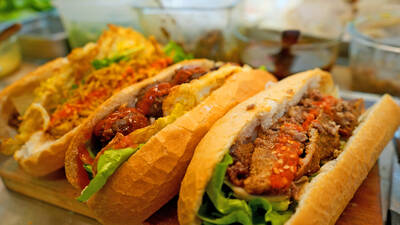
Stepping off the busy through-road at Yongan Market Station, lights flashing, horns honking, I turn down a small side street and into the warm embrace of my favorite hole-in-the-wall gem, the Hoi An Banh Mi shop (越南會安麵包), red flags and yellow lanterns waving outside. “Little sister, we were wondering where you’ve been, we haven’t seen you in ages!” the owners call out with a smile. It’s been seven days. The restaurant is run by Huang Jin-chuan (黃錦泉), who is married to a local, and her little sister Eva, who helps out on weekends, having also moved to New Taipei

The Directorate-General of Budget, Accounting and Statistics (DGBAS) told legislators last week that because the Chinese Nationalist Party (KMT) and Taiwan People’s Party (TPP) are continuing to block next year’s budget from passing, the nation could lose 1.5 percent of its GDP growth next year. According to the DGBAS report, officials presented to the legislature, the 2026 budget proposal includes NT$299.2 billion in funding for new projects and funding increases for various government functions. This funding only becomes available when the legislature approves it. The DGBAS estimates that every NT$10 billion in government money not spent shaves 0.05 percent off
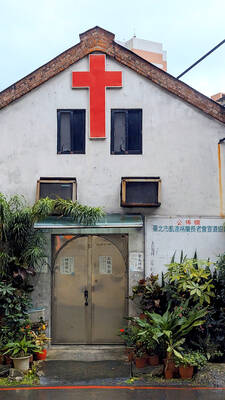
Dec. 29 to Jan. 4 Like the Taoist Baode Temple (保德宮) featured in last week’s column, there’s little at first glance to suggest that Taipei’s Independence Presbyterian Church in Xinbeitou (自立長老會新北投教會) has Indigenous roots. One hint is a small sign on the facade reading “Ketagalan Presbyterian Mission Association” — Ketagalan being an collective term for the Pingpu (plains Indigenous) groups who once inhabited much of northern Taiwan. Inside, a display on the back wall introduces the congregation’s founder Pan Shui-tu (潘水土), a member of the Pingpu settlement of Kipatauw, and provides information about the Ketagalan and their early involvement with Christianity. Most


 RSS
RSS