


It was during the last song by Monkey Insane (
Monkey Insane edged out 10 other bands that competed through the sweltering Saturday afternoon heat to walk away with the top honors in Taiwan's only music awards to recognize amateur bands that have yet to release an album.
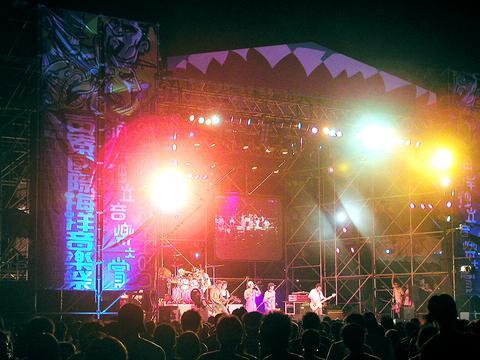
PHOTO: MAX WOODWORTH, TAIPEI TIMES
The competition was hard fought, according to the judge panel, with exceptional sets put in by the other participating bands, especially Mango Runs, Spunka, Relax One (
Stone ended up walking away with the Jury's prize, while Mango Runs and XL together shared the Indie Music Award.
The competition is held as part of the three-day Ho-Hai-Yan festival, which began on Friday and continued yesterday with a lineup of bands from Taiwan and abroad.
"There are far more people this year than any previous year," said Zhang 43, head of Taiwan Colors Music, which organized the first two days of festivities. "We've never seen this many people out here for a show before."
Indeed, the popular beach-side town of Fulong took on a carnival atmosphere throughout the weekend as thousands of concert-goers flooded in from Taipei and beyond for the annual event. Students, young office workers and even families with grandparents and tots in tow flooded the beach, turning it into a patchwork of towels and pick-up games of beach volleyball.
In previous years the bands performing on both stages tended toward the garage-band style that could impress with their raw energy if not their musical abilities. This year, however, the bands were of remarkably higher caliber.
"All the bands are really tight compared with last year. They can all really play their instruments and put together a set of solid music," Zhang said.
The music was set to get even better yesterday when MTV took over the reins of the festival "to put on its own lineup of groups from Taiwan and abroad. By yesterday afternoon crowds were swelling on the beach again to catch local favorites Sticky Rice (糯米團) and to see the headliners Jaurim from Korea and the Perishers from Sweden.
By any measure the festival was judged by organizers and concert-goers alike to be a smashing success. Even traffic was kept under control in the town as a heavy police force restrained crowds from swarming the coastal highway and extra trains carried the throngs into and out of town without much hassle.

Taiwan’s English education system is being pulled apart by three opposing forces. Bilingual Nation 2030 pulls students toward English and global communication. Artificial Intelligence (AI) readiness pulls them toward digital judgment, verification and AI-mediated work. But Taiwan’s old exam culture pulls them back toward memorization, grammar drills, timed reading and correct answers. If the education system keeps using old exams to define success, it risks producing graduates who are neither genuinely bilingual nor genuinely AI-ready, but trained for tasks machines can already perform. The first force is Bilingual Nation 2030. Launched in 2018, the policy aimed to “help Taiwan’s workforce connect
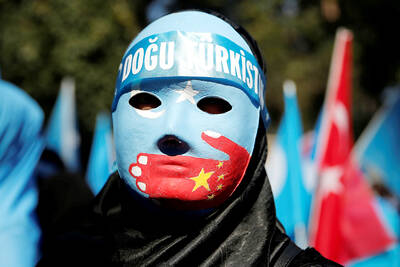
It seems every few days one bumps into one of those “real man” comments in which Taiwan is urged to “face reality” or similar, and “make a deal,” with the speaker implying that soon it will be too late. “Deal” advocates always present themselves as having a superior grip on reality, and the manly ability to make the “hard choice.” Their testosterone-laden language often echoes that of Taiwan sellout advocates. Note that such commentary always specifies a process (“make a deal, work with, make progress”), never the end state of what occupation by a violent authoritarian colonialist state will entail. In
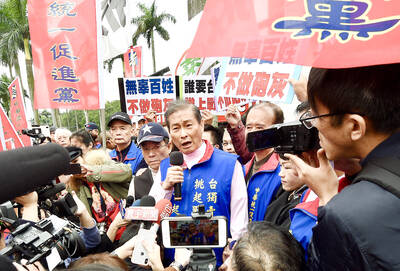
There are shadowy cabals plotting to sell out Taiwan to be annexed by China, by invasion if necessary. Fortunately, they are buffoons. In 2019, former Bamboo Union gangster and founder of the China Unification Promotion Party (CUPP), Chang An-le (張安樂, colorfully known as “White Wolf”), led a protest at the Legislative Yuan against comments made by then-premier Su Tseng-chang (蘇貞昌) that in the event of an attack by China, he would never surrender, but would protect the nation by fighting to the end, even if he only had a broom. Chang had party members bring a wooden casket that they
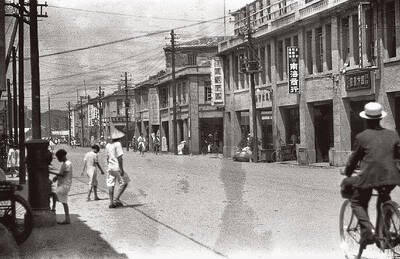
June 1 to June 7 "If all Taiwanese were as afraid of dying as you, then what would happen?” Physician Shih Chiang-nan (施江南) reportedly said this to his wife Chen Chiao-tung (陳焦桐) after she urged him to stop intervening on behalf of Taiwanese soldiers stranded overseas after serving in the Japanese Army during World War II. Shih had clashed with high-ranking officials over the issue, engaged in several heated arguments with Taiwan governor-general Chen Yi (陳儀) and allegedly shouted at general Ko Yuan-fen (柯遠芬), chief of staff of the Taiwan Garrison Command, over


 RSS
RSS