


Ever since the Eslite (誠品) flagship bookstore on Tunhua South Road went 24 hours a little more than two years ago, it has transcended the realm of mere bookstores. Now, late at night, this emporium of literature, fashion and intellectual style is often more bumping than your average Taipei disco. On weekends, every nook, step and stoop of the second-floor book stacks is filled with itinerant readers. And on weekdays, well, where else can you go to meet and greet at 4:30am on a Monday morning?
Books aside, the only salient differences between Eslite and a nightclub are the bright reading lights and the soft classical music that's piped in over the PA. Virtually every night of the week in front of the store's main entrance along Tunhua South Road, taxis line up for customers and street vendors hawk head shop jewelry form Hong Kong and Japan. The kids inside - and the after-hours crowd is definitely under 30, sometimes even under 18 - dress in baggy Ecko jeans, tinted shades, hot pants and all the same hot fashions they read about all night long in the store's magazine section. Of course, the magazine section isn't the only place for mingling. There's also the photography books section.
For a break from the books, and who's reading anyway, there's the Yuedu Cafe (閱讀咖啡), also open 24 hours. They serve your typical array of coffees, teas and cakes and even some simple food, like chicken sandwiches. Moreover, the prices are reasonable and they even have beer, including odd German brads like Pioneer Bier - Trucker's Love (NT$130), which comes in a can covered with women in bikinis and semi trucks.
The Eslite Tunhua branch is located at 245 Tunhua S. Rd., Sec. 1, Taipei (台北市敦化南路一段245號). It is open 24 hours a day 7days a week, and all major credit cards are accepted.

Taiwan’s English education system is being pulled apart by three opposing forces. Bilingual Nation 2030 pulls students toward English and global communication. Artificial Intelligence (AI) readiness pulls them toward digital judgment, verification and AI-mediated work. But Taiwan’s old exam culture pulls them back toward memorization, grammar drills, timed reading and correct answers. If the education system keeps using old exams to define success, it risks producing graduates who are neither genuinely bilingual nor genuinely AI-ready, but trained for tasks machines can already perform. The first force is Bilingual Nation 2030. Launched in 2018, the policy aimed to “help Taiwan’s workforce connect
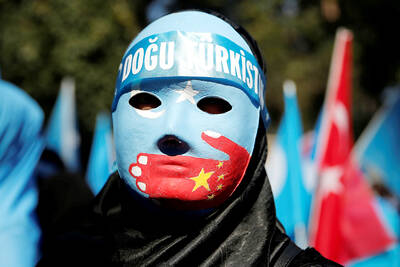
It seems every few days one bumps into one of those “real man” comments in which Taiwan is urged to “face reality” or similar, and “make a deal,” with the speaker implying that soon it will be too late. “Deal” advocates always present themselves as having a superior grip on reality, and the manly ability to make the “hard choice.” Their testosterone-laden language often echoes that of Taiwan sellout advocates. Note that such commentary always specifies a process (“make a deal, work with, make progress”), never the end state of what occupation by a violent authoritarian colonialist state will entail. In
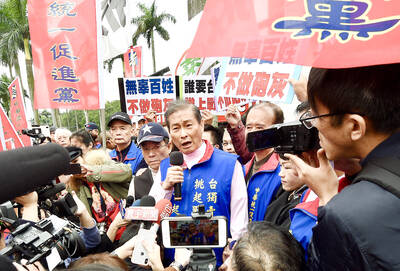
There are shadowy cabals plotting to sell out Taiwan to be annexed by China, by invasion if necessary. Fortunately, they are buffoons. In 2019, former Bamboo Union gangster and founder of the China Unification Promotion Party (CUPP), Chang An-le (張安樂, colorfully known as “White Wolf”), led a protest at the Legislative Yuan against comments made by then-premier Su Tseng-chang (蘇貞昌) that in the event of an attack by China, he would never surrender, but would protect the nation by fighting to the end, even if he only had a broom. Chang had party members bring a wooden casket that they
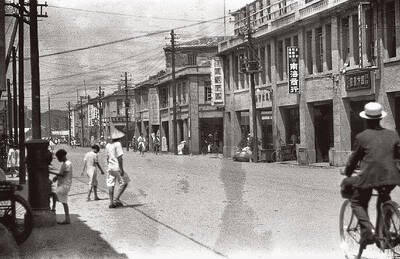
June 1 to June 7 "If all Taiwanese were as afraid of dying as you, then what would happen?” Physician Shih Chiang-nan (施江南) reportedly said this to his wife Chen Chiao-tung (陳焦桐) after she urged him to stop intervening on behalf of Taiwanese soldiers stranded overseas after serving in the Japanese Army during World War II. Shih had clashed with high-ranking officials over the issue, engaged in several heated arguments with Taiwan governor-general Chen Yi (陳儀) and allegedly shouted at general Ko Yuan-fen (柯遠芬), chief of staff of the Taiwan Garrison Command, over


 RSS
RSS