


Dinner at Rabia Sultana’s house is now served over a cold silence. Her family has not spoken to her since May, when Sultana, 21, swapped her home life for a cashier’s job at McDonald’s.
Her conservative brother berated her for damaging the family’s honor by taking a job in which she interacts with men — and especially one that requires her to shed her burqa in favor of a short-sleeved McDonald’s uniform.
Then he confiscated her uniform, slapped her across the face and threatened to break her legs if he saw her outside the home.
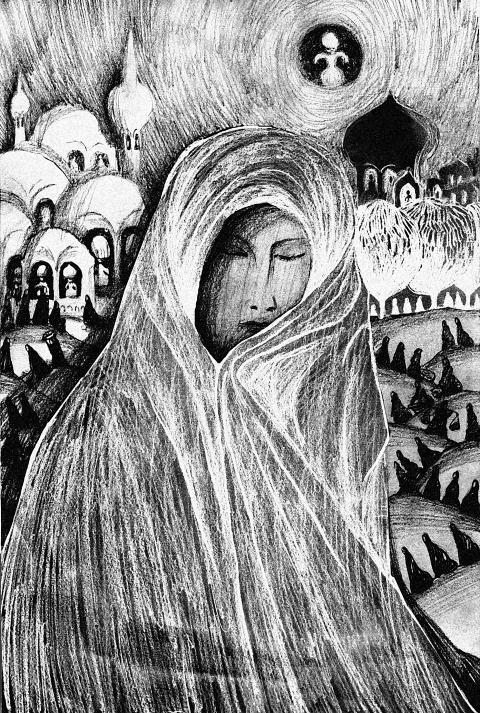
Her family may be outraged, but they are also in need. Rabia Sultana donates her US$100 monthly salary to supplement the household budget for expenses that the men in her family can no longer pay for, including school fees for her younger sisters.
Sultana is part of a small, but growing generation of lower-class young women here who are entering service-sector jobs to support their families and, by extension, pitting their religious and cultural traditions against economic desperation.
The women are pressed into the work force not by nascent feminism, but by soaring inflation, which has spiked to 12.7 percent from 1.4 percent in the past seven years. As a result, one salary — the man’s salary — can no longer feed a family.
“It’s not just the economic need, but need of the nation,” said KFC Pakistan chief executive officer Rafiq Rangoonwala, who has challenged his managers to double the number of women in his work force by next year.
“Otherwise, Pakistan will never progress. We’ll always remain a third-world country because 15 percent of the people cannot feed 85 percent of the population,” he said.
Female employment at KFC, formerly known as Kentucky Fried Chicken, in Pakistan has risen 125 percent in the past five years.
Several chains like McDonald’s and the supermarket behemoth Makro, where the number of women has quadrupled since 2006, have introduced free transit services for female employees to safeguard them from harassment and to lure them into an overtly hostile workplace.
“We’re a society in transition,” said Zeenat Hisam, a senior researcher at the Pakistan Institute of Labour Education and Research. “Men in Pakistan haven’t changed and they’re not changing as fast as our women. Men want to keep their power in their hand. The majority of the people here believe in the traditional interpretation of Islam, and they get very upset because religious leaders tell them it’s not proper for women to go out and to work and to serve strange men.”
More than 100 young women who recently entered service jobs told of continual harassment.
At work, some women spend more time deflecting abuse from customers than serving them. On the way home, they are heckled in buses and condemned by neighbors. It is so common for brothers to confiscate their uniforms that McDonald’s provides women with three sets.
“If I leave this job, everything would be OK at home, but then there’d be a huge impact on our house. I want to make something of myself, and for my sisters, who are at home and don’t know anything about the outside world,” Sultana said.
So far, the movement of women into the service sector has been limited to Karachi. Elsewhere across Pakistan, women are still largely relegated to their homes or traditional labor settings, like women-only stitching factories and girls’ schools, where salaries can be half of those in the service industry. Even the most trailblazing companies, like KFC, still employ 90 percent men.
Pakistan ranks 133 out of 134 countries, according to this year’s Global Gender Gap Report’s list of women’s economic participation.
While there is no reliable data on the number of women who specifically enter the service sector, Pakistan’s female work force hovers at about 20 percent, among the lowest of any Muslim country.
Some women, like Saima, 22, are forced to lead secret lives to earn US$175 a month. Her father’s shopkeeper salary does not cover the family’s expenses. Without a university degree, the only job Saima could find was at a call center of a major restaurant’s delivery department. However, she impressed the manager so much that he offered her a higher-paying waitress job at a branch near her home.
She reluctantly agreed, but pleaded for a branch two hours away so she would not be spotted by family members and neighbors.
After three years, her family still thinks she works in the basement of a call center. On several occasions, she served old friends who did not recognize her without a head scarf. Her confidence has soared, but she is overwhelmed with guilt.
“I’ve completely changed myself here, but honestly, I’m not happy with what I’m doing,” she said in the corner booth of her restaurant before her co-workers arrived.
The women interviewed said they had to battle stereotypes that suggested that women who work were sexually promiscuous. Sometimes men misinterpret simple acts of customer service, like a smile. Fauzia, who works as a cashier at KFC, said that last year a customer was so taken with her smile that he followed her out the door and tried to force her into his car before she escaped.
Sunila Yusuf, a saleswoman who wears pink traditional clothes at home, but skintight jeans at the trendy clothing boutique in the Park Towers shopping mall, said her fiance had offered to pay her a US$100 monthly wage if she would stay at home.
“He knows that Pakistani men don’t respect women,” she said.
Hina, who works the counter at KFC, said her brothers, who also work fast-food jobs, worried that she had become “too sharp and too exposed.”
“They can look at other people’s girls, but they want their own girls hidden,” Hina said with a grimace.
“Unfortunately, our society is a hypocritical society. We have two sets of rules: one for males and one for females,” Rangoonwala said.
For Fauzia, the hardest part of the day is the 15-minute walk through the narrow alleys to reach her home. She wears a burqa to conceal her uniform, but word of mouth about her job has already spread.
Neighbors shout: “What kind of job is this?” as she briskly walks by with her head down.
As a solution, some companies spend up to US$8,000 a month to transport their female workers in minivans.
In fact, a Pakistani federal law, citing safety concerns, prohibits women from working after 10pm. It was extended from a 7pm deadline last year.
However, most companies are unwilling to absorb the extra costs of employing women. Even most stores that sell purses, dresses, perfumes and jewelry do not employ women.
Kamil Aziz, who owns Espresso, Karachi’s most popular coffee chain, said he made it a point not to hire “the other gender” because women could not work the late shift, the turnover rate among women was higher and he did not want to invest in separate changing rooms.
In fact, nearly all of the 100 women interviewed saw marriage as an end to their careers.
However, many women see benefits along with the hazards.
Most women said that they had never left the house before taking a job. Many spent the first five months missing buses and getting lost. When they first arrived at work, they stuttered nervously in the presence of men.
Now, they know better.
“I’ve learned never to take what husbands say at face value,” said Sana Raja Haroon, a saleswoman at Labels, an upscale clothing boutique where men sometimes slide her their business card.
However, the employed women are also approached by admiring young women who want to follow their lead.
“Girls envy us,” said Bushra, who is a KFC worker. “We are considered the men of the house, and that feels good.”
ADDITIONAL REPORTING BY HUMA IMTIAZ
Taiwan’s higher education system is facing an existential crisis. As the demographic drop-off continues to empty classrooms, universities across the island are locked in a desperate battle for survival, international student recruitment and crucial Ministry of Education funding. To win this battle, institutions have turned to what seems like an objective measure of quality: global university rankings. Unfortunately, this chase is a costly illusion, and taxpayers are footing the bill. In the past few years, the goalposts have shifted from pure research output to “sustainability” and “societal impact,” largely driven by commercial metrics such as the UK-based Times Higher Education (THE) Impact
History might remember 2026, not 2022, as the year artificial intelligence (AI) truly changed everything. ChatGPT’s launch was a product moment. What is happening now is an anthropological moment: AI is no longer merely answering questions. It is now taking initiative and learning from others to get things done, behaving less like software and more like a colleague. The economic consequence is the rise of the one-person company — a structure anticipated in the 2024 book The Choices Amid Great Changes, which I coauthored. The real target of AI is not labor. It is hierarchy. When AI sharply reduces the cost
I wrote this before US President Donald Trump embarked on his uneventful state visit to China on Thursday. So, I shall confine my observations to the joint US-Philippine military exercise of April 20 through May 8, known collectively as “Balikatan 2026.” This year’s Balikatan was notable for its “firsts.” First, it was conducted primarily with Taiwan in mind, not the Philippines or even the South China Sea. It also showed that in the Pacific, America’s alliance network is still robust. Allies are enthusiastic about America’s renewed leadership in the region. Nine decades ago, in 1936, America had neither military strength
The Presidential Office on Saturday reiterated that Taiwan is a sovereign, independent nation after US President Donald Trump said that Taiwan should not “go independent.” “We’re not looking to have somebody say: ‘Let’s go independence because the United States is backing us,’” Trump said in an interview with Fox News aired on Friday. President William Lai (賴清德) on Monday said that the Republic of China (ROC) — Taiwan’s official name — and the People’s Republic of China (PRC) are not subordinate to each other. Speaking at an event marking the 40th anniversary of the establishment of the Democratic Progressive Party (DPP), Lai said


 RSS
RSS