


‘Rocks’ on cheeks
Dear Johnny,
I’m baffled by the shiny new Chinese Nationalist Party (KMT) you folk have just given absolute power to.
It’s not the ass kissin’ or the total capitulation to the Chicoms (I like this term you often use) that I write about now, but the way these spineless brown-nosers totally abandoned a young patriot who was on her way to cheer on your fellow countryfolk (“Yang slams Taipei for lack of help,” Aug. 12, page 1).
Not only was it appalling that they accused her of “making her own bed,” but more so in their display of the bitter hatred of all things associated with the now opposition party.
It’s not enough that the KMT just spent the last eight years boycotting everything in the legislature to brainwash the entire nation into thinking the administration was incompetent (easy when you control various media outlets), but this time they turned their backs on a real fan.
In fact, she went out of her way not to offend the Commies by replacing the Taiwanese flags on her clothes to that of the pathetically degrading, Commie-approved flag (it’s sad that the only “Republic of China” symbol on this rag is a KMT sun).
So all it boils down to is her support for a different candidate.
Sad it is that a party hell-bent on the “party-state” mentality would sacrifice one of its own, because of party affiliation, to appease a regime that threatens this nation with ballistic missiles and imminent war. How could any of you have thought that the KMT could ever respect the democratic process? Oh yeah ... by boycotting referendums?
If I were her and actually made it into hell, I would have had the Taiwanese flag painted on one butt cheek and the words “Kiss this Hu! Taiwan ROCKS” on the other, and mooned every camera I came across.
It’s my sincere hope that, as a nation, you will all wake up real soon and try to foster some of your own opinions about what kind of future you want for your kids.
Instead of nodding in agreement with some idiot on a talk show (way, way too many) who doesn’t know squat but can really yell, why not go and stand up for your country and bring your real flag everywhere you go?
Stand by your countryfolk, regardless of party affiliation or social class, and you will be recognized and heard.
I now see clearly why the Commies chased the KMT out of China. When are you going to wake up and do the same?
James
Chiayi
Johnny replies: Well, James, your prognosis sounds healthy, but a place that would reinstate a memorial to a vicious but incompetent little dictator (as silly as the original change was) is eons away from agreeing on a flag that would best instill that old “Olympic spirit” in its nationalistically challenged athletes.
Taiwanese pragmatism has long been praised when it comes to addressing Chinese attempts to erase Taiwan from the international stage. “Taipei” and the even more inaccurate and degrading “Chinese Taipei,” imposed titles required to participate in international events, are loathed by Taiwanese. That is why there was huge applause in Taiwan when Japanese public broadcaster NHK referred to the Taiwanese Olympic team as “Taiwan,” instead of “Chinese Taipei” during the opening ceremony of the Tokyo Olympics. What is standard protocol for most nations — calling a national team by the name their country is commonly known by — is impossible for
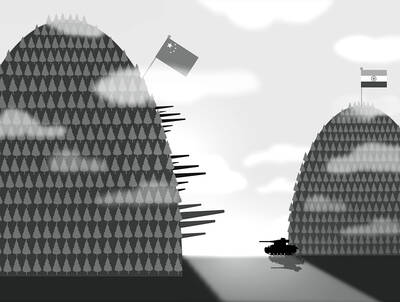
India is not China, and many of its residents fear it never will be. It is hard to imagine a future in which the subcontinent’s manufacturing dominates the world, its foreign investment shapes nations’ destinies, and the challenge of its economic system forces the West to reshape its own policies and principles. However, that is, apparently, what the US administration fears. Speaking in New Delhi last week, US Deputy Secretary of State Christopher Landau warned that “we will not make the same mistakes with India that we did with China 20 years ago.” Although he claimed the recently agreed framework
The Office of the US Trade Representative (USTR) on Wednesday last week announced it is launching investigations into 16 US trading partners, including Taiwan, under Section 301 of the Trade Act of 1974 to determine whether they have engaged in unfair trade practices, such as overproduction. A day later, the agency announced a separate Section 301 investigation into 60 economies based on the implementation of measures to prohibit the importation of goods produced with forced labor. Several of Taiwan’s main trading rivals — including China, Japan, South Korea and the EU — also made the US’ investigation list. The announcements come
Taiwan is not invited to the table. It never has been, but this year, with the Philippines holding the ASEAN chair, the question that matters is no longer who gets formally named, it is who becomes structurally indispensable. The “one China” formula continues to do its job. It sets the outer boundary of official diplomatic speech, and no one in the region has a serious interest in openly challenging it. However, beneath the surface, something is thickening. Trade corridors, digital infrastructure, artificial intelligence (AI) cooperation, supply chains, cross-border investment: The connective tissue between Taiwan and ASEAN is quietly and methodically growing


 RSS
RSS