


Amazon.com Inc is in the running to acquire Landmark Theatres, a move that would vault the e-commerce giant into the brick-and-mortar cinema industry, people familiar with the situation said.
The company is vying with other suitors to acquire the business from Wagner/Cuban Cos, which is backed by billionaire Mark Cuban and Todd Wagner, said the people, who asked not to be identified because the discussions are private.
The chain’s owners have been working with investment banker Stephens Inc on a possible sale, the people said, adding that no final decisions have been made and talks could still fall apart.
Pushing into movie theaters would follow Amazon’s expansion into myriad other forms of media, including a film, TV studio and music service.
With Landmark, it would acquire a chain focused on independent and foreign films that was founded in 1974. The company has more than 50 theaters, including high-profile locations in New York, Philadelphia, Chicago, Los Angeles and San Francisco, with about 250 screens in 27 markets.
Amazon declined to comment. Officials at Landmark could not be reached after normal business hours.
The e-commerce company already spends billions each year on movies and TV shows, saying that it helps entice shoppers to join its Prime subscription plan and makes existing members more likely to renew.
The US government has previously barred film studios from the theater industry, but it said earlier this month that it was considering terminating a 70-year-old Hollywood settlement that halted the vertical integration of studios and theaters.
The so-called Paramount decree might have prevented smaller films from getting wider distribution.
In other developments, Amazon is in talks with European insurers regarding the creation of a UK price-comparison site, a Reuters report said, citing people familiar with the matter.
It is unclear what insurance products would be sold, and there are no imminent plans to launch a site, Reuters said yesterday.
Amazon is sounding out some of Europe’s top insurance firms to see if they would contribute to a UK price-comparison Web site, Reuters reported.
The UK insurance-comparison market is highly competitive, with comparethemarket.com and GoCompare.com Group PLC the major providers.
Amazon, which declined to comment, offers a service called Amazon Protect, which offers accident insurance on consumer goods.
Amazon has previously invested in Indian-based digital insurance startup Acko Technologies and also placed job advertisements for insurance product managers.
Amazon is “disrupting the way traditional product insurance services are acquired and delivered and creating a new palette of services,” an internal job advertisement said.

Cairo’s new monorail slices across the city skyline, running above the familiar chaos of blaring horns and aging buses’ exhaust fumes that mark rush hour below. The US$4.5 billion monorail, opened this month, is among Egypt’s most prominent new transport projects, part of a debt-funded infrastructure drive criticized for sapping state finances while bringing limited benefits to most of the country’s 109 million people. “It feels like you’re in a different country,” said Ramy Sayed, a restaurant manager, aboard a driverless Innovia 300 train. “No noise, no traffic, we’re not used to this.” The eastern line runs 56km from the bustling middle-class
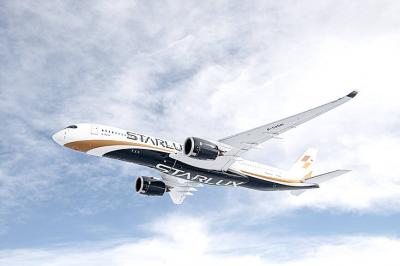
Starlux Airlines Co (星宇航空) today unveiled a long-haul network expansion plan at a shareholders’ meeting in Taipei, including direct flights to Barcelona, Spain, and Zurich, Switzerland, as well as a service connecting Taipei, Sydney and New Zealand. Starlux is to become the first Taiwanese carrier to offer non-stop services to the two European cities, while the inaugural oceanic route is expected to expand transit opportunities within the Australia-New Zealand market, Starlux said. Flight services to Chicago, Dallas, Washington and New York are under evaluation, the airline added. Prior to the shareholders’ meeting, the airline earlier this year announced that it would be

Taiwanese prosecutors suspect that three people successfully smuggled at least one shipment of Nvidia Corp artificial intelligence (AI) chips to China after first exporting them to Japan, people familiar with the matter said. The trio was detained last week by the Keelung District Prosecutors’ Office for allegedly falsifying documents related to exports of Super Micro Computer Inc servers containing advanced Nvidia chips, which the US has barred from sale to China without a license from Washington. The move marked Taiwan’s first public crackdown on AI chip diversion after years of pressure from the US to take a more active role in curtailing
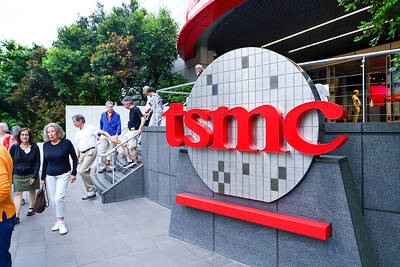
Taiwan Semiconductor Manufacturing Co (TSMC, 台積電) employee bonuses are likely to grow more than 30 percent this year, in line with the past few years as the company’s profits continue to set new records, an anonymous source cited TSMC chairman C.C. Wei (魏哲家) as saying yesterday. TSMC, the world’s largest contract chipmaker, is committed to taking care of its workers, the source said, citing Wei’s meeting with employees yesterday morning. Wei also expressed gratitude to employees for their contribution to the company’s improving bottom line, the source added. Since 2023, TSMC’s employee bonuses have grown at an annual rate of


 RSS
RSS