


Fubon Financial Holding Co (富邦金控) yesterday said that its life insurer arm is to acquire a controlling stake in a South Korean peer as the company expands its presence in north Asia.
Fubon Life Insurance Co (富邦人壽) is planning to raise its stake in Hyundai Life Insurance Co from 48 percent to 62 percent by purchasing 46.72 million new shares at a cost of 233.6 billion won (US$218.32 million), Fubon Financial executive vice president Joyce Chen (陳昭如) said at a news conference at the Taiwan Stock Exchange.
That would make Fubon Life the biggest shareholder in the South Korean life insurer, followed by Hyundai Mobis Co, its former parent company.
The deal is expected to be approved by Fubon Financial’s board of directors next Thursday and completed in the second half of this year, pending approval by local and South Korean regulators.
The South Korean company would also be renamed Fubon Hyundai Life Insurance.
Chen said that Fubon Life’s controlling stake would allow it to appoint key executives at the South Korean company, including president, chief investment, risk, financial and actuary officers.
Fubon Financial said it is upbeat on South Korea’s market for pension and retirement planning, and aims to strengthen the operation of its investee and generate steady returns through online marketing and digital distribution channels and a broader offering of financial services.
However, Hyundai Life has experienced layoffs and restructuring as the company continues to grapple with losses and meeting International Financial Reporting Standard 9 guidelines, which are to take effect in 2021, South Korean media reports said.
As of June last year, the South Korean insurer had a risk-based capital ratio of 164 percent, barely exceeding financial authorities’ recommendation of 150 percent, South Korean media reported.
Shares of contract chipmaker Taiwan Semiconductor Manufacturing Co (TSMC, 台積電) came under pressure yesterday after a report that Apple Inc is looking to shift some orders from the Taiwanese company to Intel Corp. TSMC shares fell NT$55, or 2.4 percent, to close at NT$2,235 on the local main board, Taiwan Stock Exchange data showed. Despite the losses, TSMC is expected to continue to benefit from sound fundamentals, as it maintains a lead over its peers in high-end process development, analysts said. “The selling was a knee-jerk reaction to an Intel-Apple report over the weekend,” Mega International Investment Services Corp (兆豐國際投顧) analyst Alex Huang
Taiwan Semiconductor Manufacturing Co (TSMC, 台積電) is expected to remain Apple Inc’s primary chip manufacturing partner despite reports that Apple could shift some orders to Intel Corp, industry experts said yesterday. The comments came after The Wall Street Journal reported on Friday that Apple and Intel had reached a preliminary agreement following more than a year of negotiations for Intel to manufacture some chips for Apple devices. Taiwan Institute of Economic Research (台灣經濟研究院) economist Arisa Liu (劉佩真) said TSMC’s advanced packaging technologies, including integrated fan-out and chip-on-wafer-on-substrate, remain critical to the performance of Apple’s A-series and M-series chips. She said Intel and Samsung
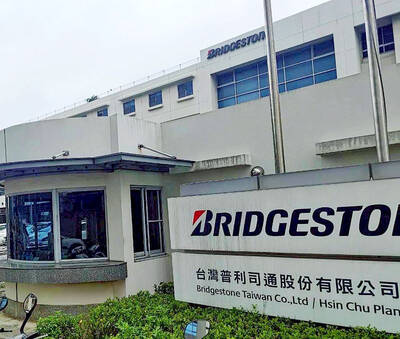
TRANSITION: With the closure, the company would reorganize its Taiwanese unit to a sales and service-focused model, Bridgestone said Bridgestone Corp yesterday announced it would cease manufacturing operations at its tire plant in Hsinchu County’s Hukou Township (湖口), affecting more than 500 workers. Bridgestone Taiwan Co (台灣普利司通) said in a statement that the decision was based on the Tokyo-based tire maker’s adjustments to its global operational strategy and long-term market development considerations. The Taiwanese unit would be reorganized as part of the closure, effective yesterday, and all related production activities would be concluded, the statement said. Under the plan, Bridgestone would continue to deepen its presence in the Taiwanese market, while transitioning to a sales and service-focused business model, it added. The Hsinchu
Taiwan Semiconductor Manufacturing Co (TSMC, 台積電) has approved a capital budget of US$31.28 billion for production expansion to meet long-term development needs during the artificial intelligence (AI) boom. The company’s board meeting yesterday approved the capital appropriation plan for purposes such as the installation of advanced technology capacity and fab construction, the world’s largest contract chipmaker said in a statement. At an earnings conference last month, TSMC forecast that its capital expenditure for this year would be at the higher end of the US$52 billion to US$56 billion range it forecast in January in response to robust demand for 5G, AI and


 RSS
RSS