


If the New York Knicks do not match Houston’s contract offer to point guard Jeremy Lin (林書豪), perhaps nobody would be more disappointed than Mitchell Modell, whose namesake sporting-goods retailer will have to sharply discount its 40,000 Lin team-related items in stock.
“We’re going to have crazy, crazy prices — like US$5,” Modell said in a telephone interview.
T-shirts list for US$24.99 on Modell’s Web site, with jerseys going for as much as US$89.99.
The Knicks announced on Monday that they had reacquired point guard Raymond Felton as part of a trade with Portland. Along with the team’s signing of point guard Jason Kidd earlier this month, the Felton trade makes it much less likely that New York will match Houston’s contract offer to Lin.
The Knicks had until 11:59pm New York time last night to decide whether they would match the three-year, US$25 million contract offered by the Rockets to Lin, whose apparel is the top-selling among National Basketball Association (NBA) players this year, according to Fanatics Inc, an online retailer in Jacksonville, Florida.
Merchandise related to Lin, a Harvard University graduate who is the first Taiwanese-American to play in the NBA, has outsold Most Valuable Player LeBron James of the Miami Heat by more than 50 percent, Anne Lacey Whitaker, a Fanatics spokeswoman, said via e-mail.
Modell said his company would wait until the morning after the deadline before altering the price of any Lin New York-related item.
Fanatics offers about 300 Lin-related items, including T-shirts and jerseys, Whitaker said, declining to number the total products in stock.
“If Lin leaves, this product is going to be worth virtually nothing,” said Matt Powell, an analyst with Charlotte, North Carolina-based SportsOneSource, an analysis firm focused on the sporting-goods industry.
Nike Inc spokesman Brian Strong, whose products are endorsed by Lin, said he did not immediately know how much merchandise linked to the player the company had.
Lin’s rise to prominence last season was captured by the term “Linsanity,” which the 23-year-old point guard has moved to trademark. It also fueled a rise in ticket prices, merchandise sales and television ratings for the Knicks.
One team sponsor, the Coca-Cola Co, added advertisements in Chinese to reach the TV audience in China, where the team’s games were added to the broadcast schedule amid Lin’s rise in popularity.
Lin was even credited for playing a role in helping the MSG cable network, part of Madison Square Garden Inc, the Knicks’ parent company, settle its pricing dispute with Time Warner Cable Inc.
Some retail outlets are not waiting for the deadline to discount their Lin merchandise amid an ESPN report that the Knicks will not match the offer.
At Steiner Sports, for instance, a Knicks T-shirt with Lin’s No. 17 is priced at US$9.99, down from US$24.99. Brett Schissler, an executive vice president at Westchester, New York-based Steiner, said the company, which focuses on autographed memorabilia, does not have much Knicks-centered merchandise. Rather than have a player sign a team-related item, which could be obsolete with a trade, Steiner usually asks players to sign basketballs.
“For us, the autograph side will always be there, whether he’s in New York or Houston or San Antonio,” Schissler said via telephone.
He said his company has about 150 pieces of Lin-related merchandise left, mostly basketballs.

Cairo’s new monorail slices across the city skyline, running above the familiar chaos of blaring horns and aging buses’ exhaust fumes that mark rush hour below. The US$4.5 billion monorail, opened this month, is among Egypt’s most prominent new transport projects, part of a debt-funded infrastructure drive criticized for sapping state finances while bringing limited benefits to most of the country’s 109 million people. “It feels like you’re in a different country,” said Ramy Sayed, a restaurant manager, aboard a driverless Innovia 300 train. “No noise, no traffic, we’re not used to this.” The eastern line runs 56km from the bustling middle-class
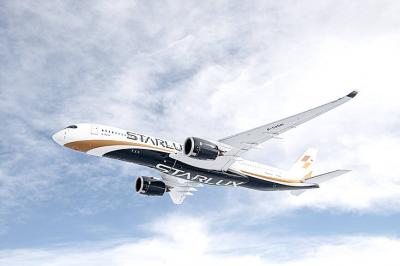
Starlux Airlines Co (星宇航空) today unveiled a long-haul network expansion plan at a shareholders’ meeting in Taipei, including direct flights to Barcelona, Spain, and Zurich, Switzerland, as well as a service connecting Taipei, Sydney and New Zealand. Starlux is to become the first Taiwanese carrier to offer non-stop services to the two European cities, while the inaugural oceanic route is expected to expand transit opportunities within the Australia-New Zealand market, Starlux said. Flight services to Chicago, Dallas, Washington and New York are under evaluation, the airline added. Prior to the shareholders’ meeting, the airline earlier this year announced that it would be

Taiwanese prosecutors suspect that three people successfully smuggled at least one shipment of Nvidia Corp artificial intelligence (AI) chips to China after first exporting them to Japan, people familiar with the matter said. The trio was detained last week by the Keelung District Prosecutors’ Office for allegedly falsifying documents related to exports of Super Micro Computer Inc servers containing advanced Nvidia chips, which the US has barred from sale to China without a license from Washington. The move marked Taiwan’s first public crackdown on AI chip diversion after years of pressure from the US to take a more active role in curtailing
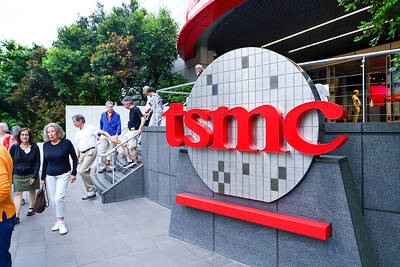
Taiwan Semiconductor Manufacturing Co (TSMC, 台積電) employee bonuses are likely to grow more than 30 percent this year, in line with the past few years as the company’s profits continue to set new records, an anonymous source cited TSMC chairman C.C. Wei (魏哲家) as saying yesterday. TSMC, the world’s largest contract chipmaker, is committed to taking care of its workers, the source said, citing Wei’s meeting with employees yesterday morning. Wei also expressed gratitude to employees for their contribution to the company’s improving bottom line, the source added. Since 2023, TSMC’s employee bonuses have grown at an annual rate of


 RSS
RSS